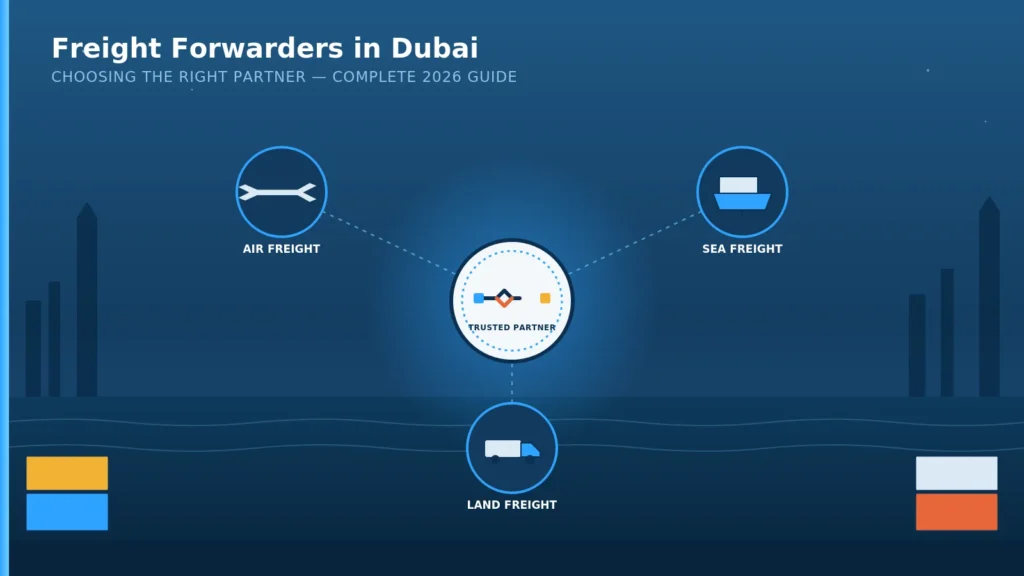
Dubai has become one of the world’s busiest trade hubs, connecting Asia, Europe, and Africa through its ports, airports, and free zones. If your business imports or exports goods through the UAE, choosing the right freight forwarders in Dubai can be the difference between a shipment that arrives on time and one that gets stuck in customs for weeks. This guide covers everything you need to know about working with freight forwarders in Dubai — from the different types of services available, to how customs clearance actually works, to the documents you’ll need along the way. By the end, you’ll have a practical checklist for choosing the right partner for your shipments.
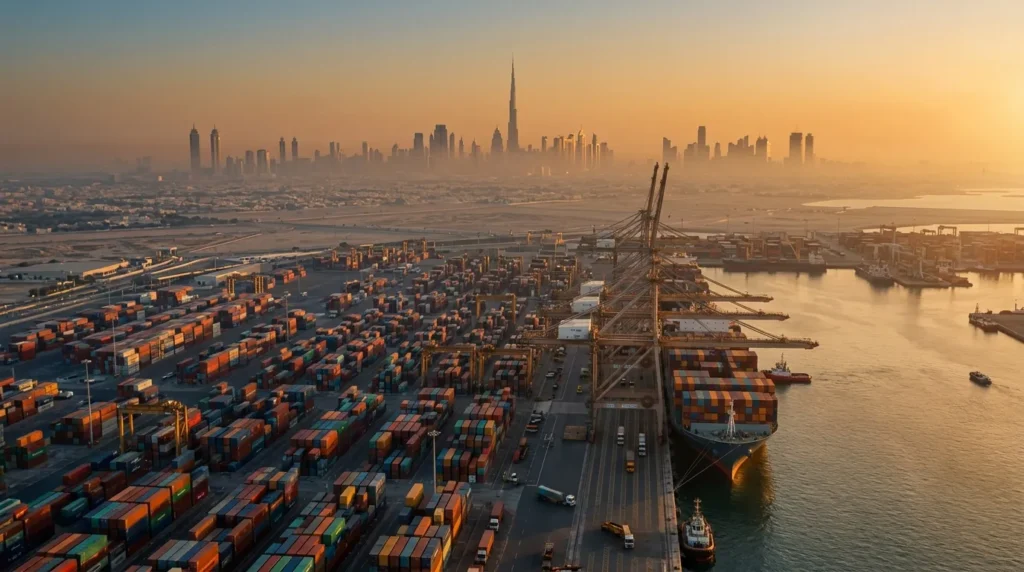
What Is a Freight Forwarder and What Do They Do?
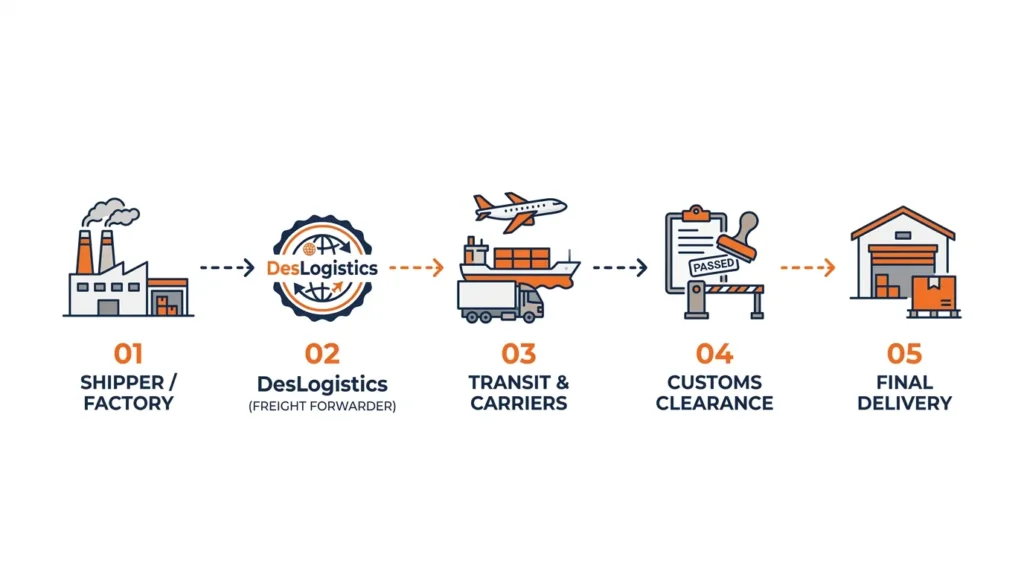
A freight forwarder is a company that organizes the shipment of goods on behalf of an individual shipper or business. Rather than owning ships, planes, or trucks themselves, a freight forwarder acts as the middleman between you and the actual transportation services — negotiating rates, booking cargo space, arranging customs clearance, and handling the paperwork so your goods move smoothly from origin to destination.
In practice, a good freight forwarder in Dubai handles:
- Booking cargo space with airlines, shipping lines, or trucking companies
- Preparing and checking shipping documentation
- Coordinating customs clearance and compliance
- Arranging warehousing and cargo consolidation
- Providing door-to-door delivery
- Advising on the most cost-effective shipping method for your cargo
Top Freight Forwarding Companies in Dubai
Dubai is home to hundreds of freight forwarding companies, ranging from large multinational logistics groups to specialized local operators. When people search for top freight forwarding companies in Dubai, they’re usually comparing businesses on a few key factors:
- Years of experience and industry reputation
- Network coverage — how many countries and ports they connect to
- Specialization — general cargo vs. project cargo, perishables, or dangerous goods
- Free zone access — especially Jebel Ali Free Zone (JAFZA) and Dubai Airport Free Zone (DAFZA)
- Customs clearance capability in-house vs. outsourced
- Technology — shipment tracking, digital documentation, online quotes
Rather than naming a “best” company outright, it’s more useful to know what separates a strong freight forwarding company in Dubai from an average one — which is exactly what the checklist further down in this guide covers.

Freight Forwarding Services in Dubai: Air, Sea, and Land
Freight forwarding services in Dubai typically fall into three main categories, and most businesses end up using a combination of all three depending on cargo type, budget, and delivery timeline.
Air Freight Forwarding Services
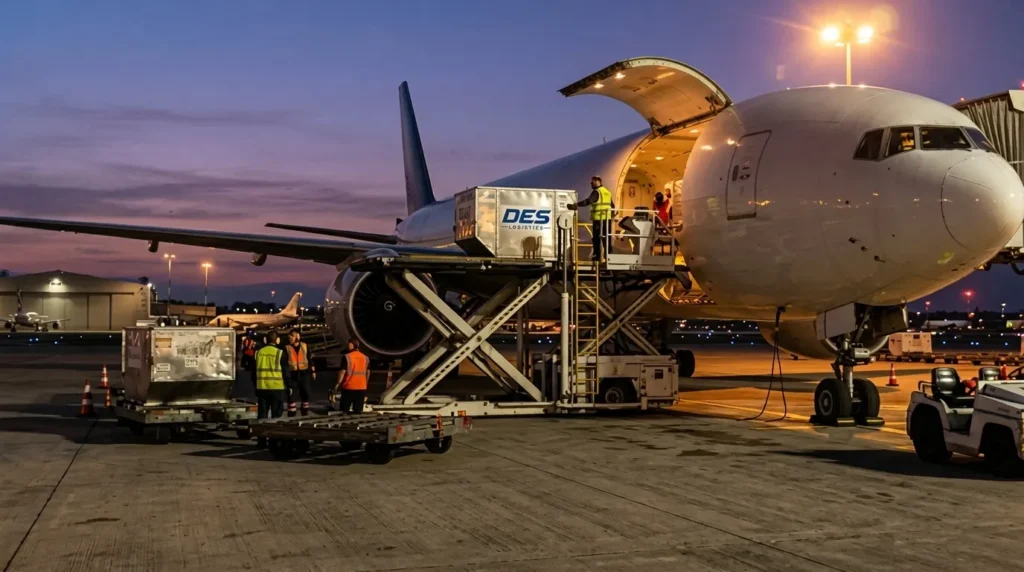
Air freight forwarding services are the fastest option, ideal for high-value, time-sensitive, or perishable goods. Dubai International Airport (DXB) and Al Maktoum International Airport are among the busiest cargo hubs in the world, giving forwarders direct access to global air routes.
Best for: electronics, pharmaceuticals, fashion, urgent B2B shipments Trade-off: higher cost per kilogram compared to sea freight
Sea Freight Forwarding Services
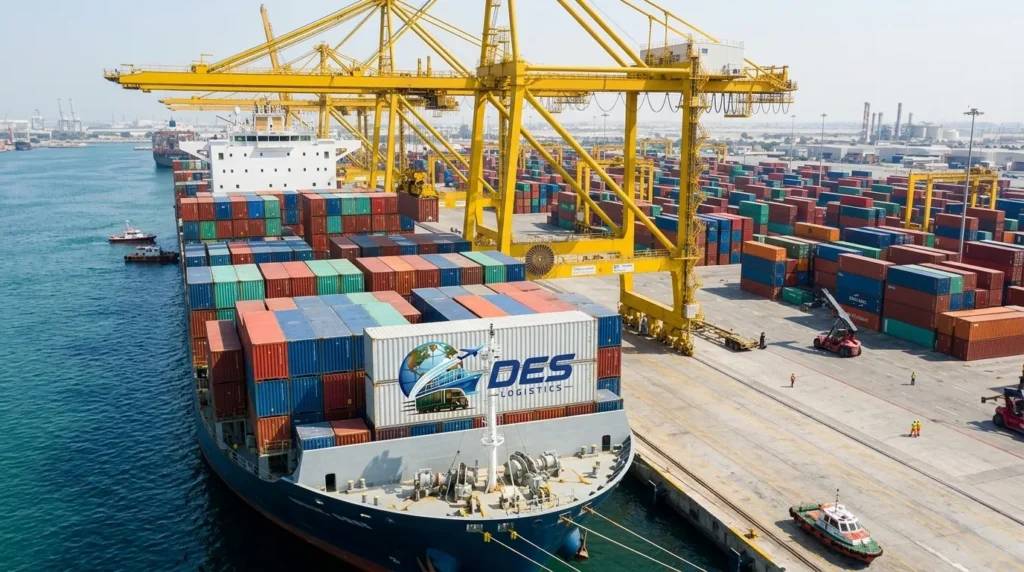
Sea freight forwarding services move the vast majority of global trade by volume. Dubai’s Jebel Ali Port is the largest man-made harbor in the world and a major transshipment hub for the region.
Sea freight is typically arranged as:
- FCL (Full Container Load): you rent an entire container — cost-effective for large shipments
- LCL (Less than Container Load): your goods share a container with other shippers — cost-effective for smaller shipments
Best for: bulk goods, raw materials, furniture, machinery Trade-off: slower transit time (days to weeks depending on the route)
Land Freight Services
Land freight is essential for cross-border trade within the GCC — moving goods by truck between the UAE, Saudi Arabia, Oman, Bahrain, Qatar, and Kuwait.
Best for: intra-GCC trade, last-mile delivery, FTL/LTL trucking
Freight Forwarders in UAE: Beyond Dubai
While Dubai is the main logistics hub, many freight forwarders in UAE also operate out of Abu Dhabi, Sharjah, and Ajman, giving businesses flexibility depending on where their factory, warehouse, or free zone license is based. Most Dubai-based forwarders also handle shipments through Abu Dhabi’s Khalifa Port and Sharjah’s Port Khalid, so your choice of freight forwarder doesn’t have to be limited by emirate.
Customs Clearance: What a Customs Broker Actually Does
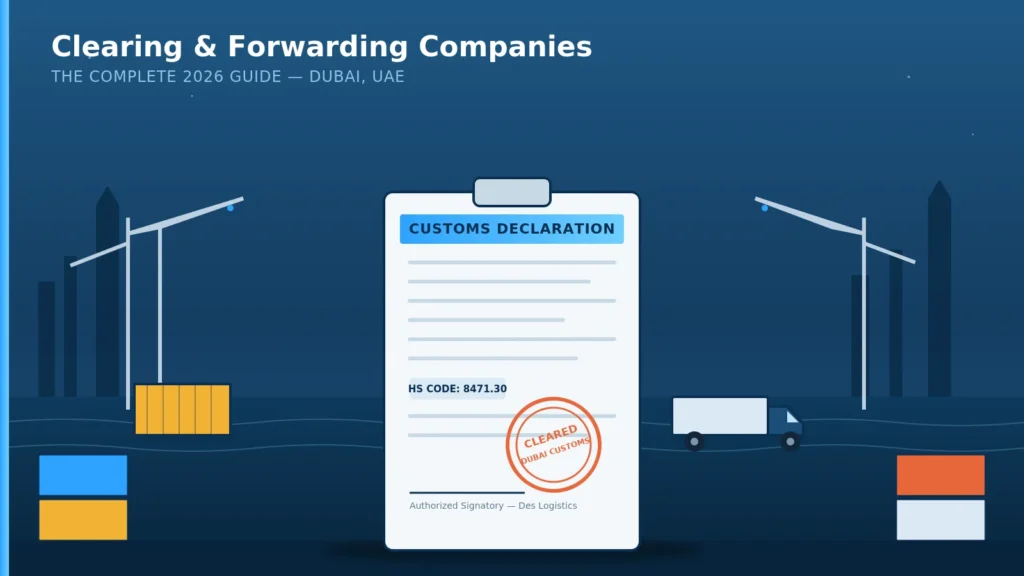
Customs clearance is often the most stressful part of shipping — and one of the main reasons businesses hire a freight forwarder in Dubai instead of handling logistics themselves.
A customs broker (often part of the freight forwarder’s team) manages:
- Filing your customs declaration through Dubai Customs’ online system (Mirsal 2)
- Calculating and paying applicable duties and VAT (5% on most imports)
- Coordinating inspections with authorities like Dubai Municipality, ESMA, or TRA when required
- Handling special approvals for restricted or regulated goods (food, pharmaceuticals, electronics)
- Resolving detained cargo issues quickly to avoid demurrage charges
Tip: Ask any forwarder you’re considering whether customs clearance is handled in-house or outsourced. In-house clearance is usually faster and reduces miscommunication.
Door-to-Door Delivery: Why It Matters
Many businesses now prefer door-to-door delivery, where the freight forwarder manages the entire journey — from picking up goods at the supplier’s factory overseas to delivering them directly to your warehouse in Dubai — including customs clearance, port handling, and last-mile trucking.
This is especially useful for businesses that don’t have the time or expertise to manage each leg of the shipment separately.
Understanding Incoterms: FOB, CIF, and EXW Explained
Incoterms (International Commercial Terms) define who is responsible for costs and risks at each stage of a shipment. Getting this wrong can lead to unexpected charges, so it’s worth understanding the three terms you’ll see most often when shipping to or from Dubai:
| Incoterm | What It Means | Who Pays for Main Shipping |
| EXW (Ex Works) | Seller makes goods available at their premises; buyer arranges everything else | Buyer |
| FOB (Free on Board) | Seller delivers goods to the port and loads them onto the vessel | Buyer (from port onward) |
| CIF (Cost, Insurance, Freight) | Seller pays for shipping and insurance to the destination port | Seller (until destination port) |
A reliable freight forwarder should be able to explain which Incoterm works best for your specific shipment and supplier relationship.
Shipping Documentation You’ll Need
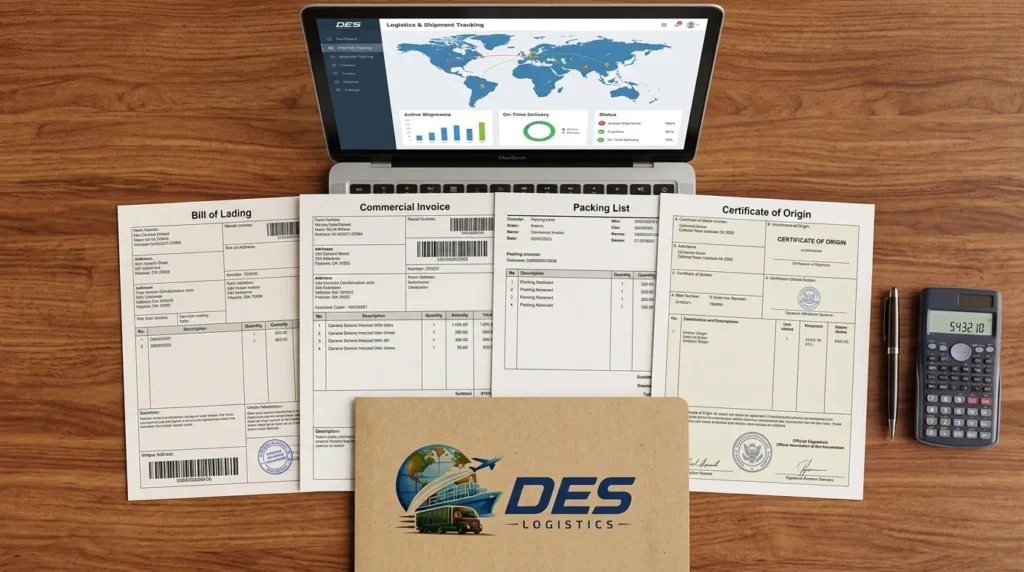
Proper shipping documentation is one of the most common reasons shipments get delayed at customs. Standard documents include:
- Bill of Lading (B/L) or Airway Bill — proof of the shipping contract and receipt of goods
- Commercial Invoice — details value, buyer, and seller
- Packing List — itemized contents of the shipment
- Certificate of Origin
- Import/Export License (as required for the free zone or mainland entity)
[IMAGE 9 — Flat lay photo of shipping documents (Bill of Lading, invoice, packing list) with a laptop, or a checklist-style graphic. Alt text: “Shipping documentation checklist – bill of lading and packing list”]
Warehousing and 3PL Services
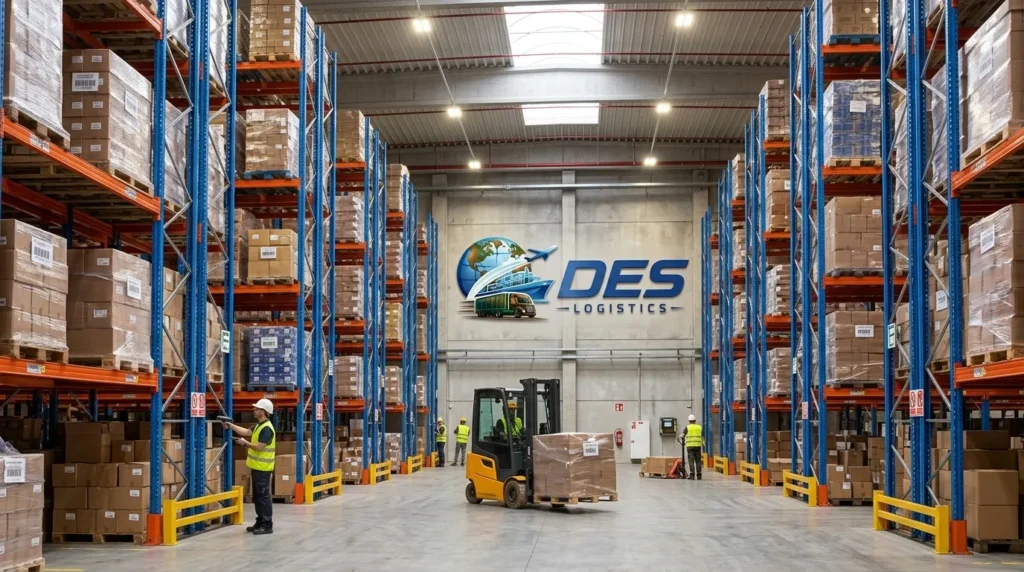
Many freight forwarders in Dubai also offer warehousing and 3PL (third-party logistics) services — storage, inventory management, order fulfillment, and distribution. This is particularly useful for e-commerce businesses and importers who need a local base in the UAE before goods reach their final customers.
What Affects Freight Forwarding Costs in Dubai?
Pricing varies significantly, but the main cost factors include:
- Mode of transport (air is fastest but most expensive; sea is cheaper but slower)
- Cargo weight and volume (chargeable weight for air freight, CBM for sea freight)
- Distance and route (direct vs. transshipment routes)
- Customs duties and VAT
- Additional services (insurance, warehousing, door-to-door delivery)
- Seasonal demand (peak shipping seasons increase freight rates)
Always ask for a full breakdown rather than a single lump-sum quote — this makes it much easier to compare freight companies in Dubai fairly.
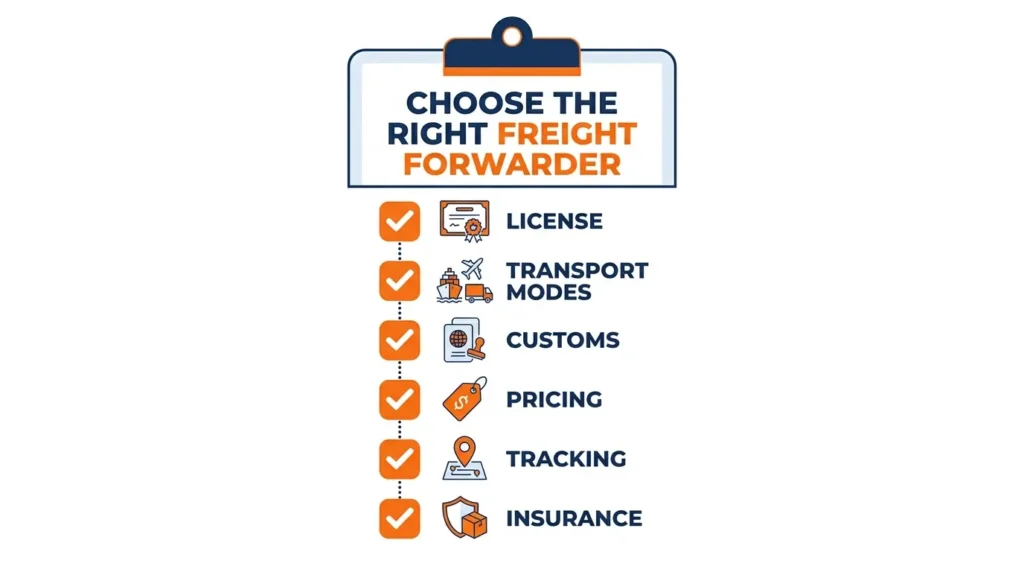
How to Choose a Freight Forwarder in Dubai: A Practical Checklist
Use this checklist when comparing freight forwarders near you:
- [ ] Do they have a valid trade license and membership in recognized bodies (e.g., FIATA)?
- [ ] Do they offer the specific mode of transport you need (air, sea, land, or multimodal)?
- [ ] Do they handle customs clearance in-house?
- [ ] Can they provide references or case studies from businesses in your industry?
- [ ] Do they offer transparent, itemized pricing rather than vague quotes?
- [ ] Do they provide shipment tracking and regular status updates?
- [ ] Do they have experience with your specific cargo type (perishables, dangerous goods, oversized cargo, etc.)?
- [ ] What is their average transit time on your specific trade route?
- [ ] Do they offer cargo insurance, and is it included or optional?
Import and Export from Dubai: A Quick Overview
Dubai’s position as a re-export hub makes it a popular base for import/export businesses. A few things to know:
- The UAE is part of the Gulf Cooperation Council (GCC), which means goods moving between GCC member states are largely exempt from customs duties.
- Free zones like JAFZA and DAFZA allow 100% foreign ownership and simplified re-export procedures.
- Most goods attract 5% VAT and standard customs duty, though many categories qualify for reduced or zero rates under trade agreements.
- Certain goods (food, pharmaceuticals, electronics with radio frequencies) require additional approvals from specific authorities before clearance.
Frequently Asked Questions
What does a freight forwarder do in Dubai? A freight forwarder arranges transportation, documentation, and customs clearance for shipments moving in or out of the UAE, acting as a single point of contact instead of you dealing separately with airlines, shipping lines, and customs authorities.
How do I find good freight forwarders near me in Dubai? Look for companies with in-house customs clearance, a presence near major hubs like Jebel Ali or DAFZA, transparent pricing, and verifiable client reviews — rather than choosing based on location alone.
Is a freight forwarder the same as a shipping and logistics company? Not exactly. Shipping and logistics companies in Dubai often provide a broader range of services (warehousing, distribution, fleet management), while freight forwarding is specifically about arranging the movement of goods and related documentation. Many companies now offer both under one roof.
How long does customs clearance take in Dubai? With complete and accurate documentation, customs clearance in Dubai can often be completed within a few hours to one business day. Delays usually happen due to missing paperwork or goods requiring additional regulatory approval.
What is the difference between FCL and LCL sea freight? FCL means your cargo has an entire container to itself, while LCL means your goods share container space with other shipments — LCL is more cost-effective for smaller volumes but generally takes slightly longer due to consolidation.
Final Thoughts
Choosing the right freight forwarder in Dubai comes down to matching your cargo type, budget, and timeline with a company that has the right network, in-house customs expertise, and transparent pricing. Use the checklist above during your comparison process, and don’t hesitate to ask forwarders detailed questions about documentation, Incoterms, and cost breakdowns before committing to a partner.