
International shipping companies in Dubai do more than book cargo space on a ship or plane — they coordinate customs paperwork, route planning, and delivery timelines across multiple countries at once. For businesses moving goods overseas or individuals relocating belongings abroad, the right partner determines whether a shipment clears customs smoothly or sits delayed at a border. Dubai’s position as a global trade gateway means dozens of providers compete for your business, but not all offer the same expertise, transparency, or route coverage. This guide explains what international shipping companies actually handle, the difference between freight agencies and maritime logistics providers, and how to choose one you can rely on.
What Do International Shipping Companies in Dubai Do?
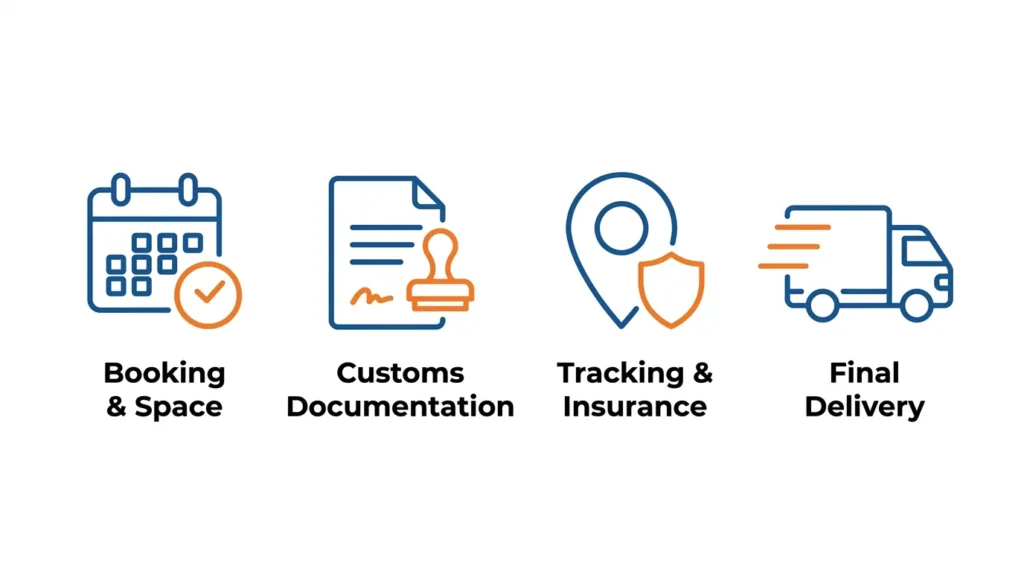
An international shipping company manages the movement of goods across borders — coordinating everything between the point of origin and final delivery. This typically includes:
- Booking cargo space across air, sea, or land routes
- Preparing export and import customs documentation
- Managing international cargo through consolidation, container loading, or air freight booking
- Coordinating with customs authorities at both origin and destination
- Providing insurance and shipment tracking
- Arranging final delivery to the consignee
Because international shipments cross multiple jurisdictions, the best providers combine logistics expertise with a solid understanding of customs regulations in both the UAE and the destination country.
International Freight Agency vs. International Maritime Logistics vs. International Transport Company
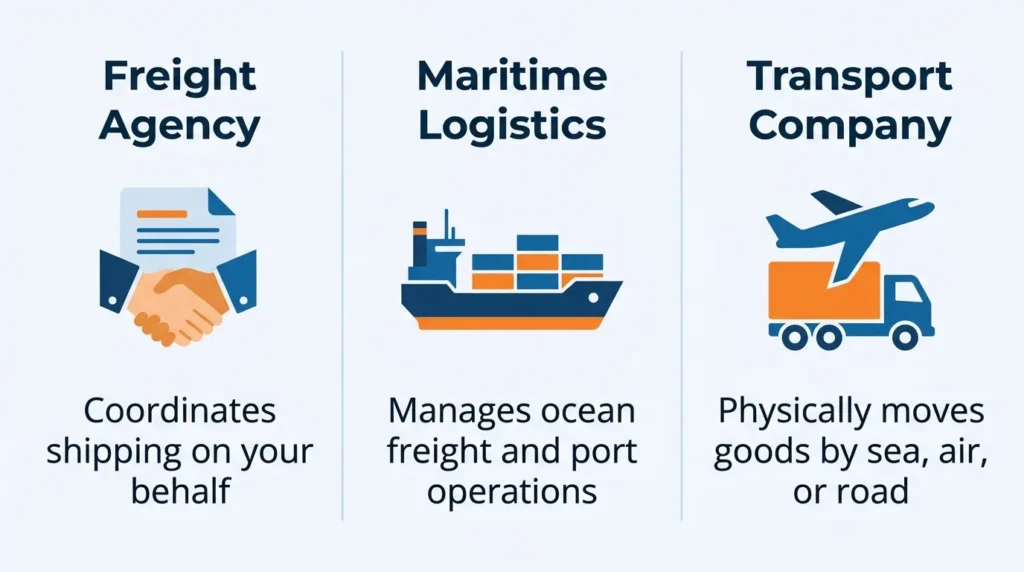
These three terms are often used interchangeably, but they describe slightly different specializations — understanding the difference helps you brief the right type of provider.
International Freight Agency Acts as an intermediary that arranges shipping on your behalf — booking space with carriers, handling documentation, and managing the logistics chain without necessarily owning the ships, trucks, or planes involved.
International Maritime Logistics Focuses specifically on ocean freight — managing container bookings, port operations, vessel schedules, and sea freight documentation. This is the go-to specialization for bulk or heavy international shipments.
International Transport Company A broader term covering companies that physically move goods, whether by sea, air, or road, and may operate their own fleet or transport assets rather than purely brokering the shipment.
In practice, most established providers in Dubai blend all three roles — acting as a freight agency for coordination, offering maritime logistics for sea freight, and operating (or partnering with) a transport network for the final delivery leg.
Types of International Shipping Services from Dubai
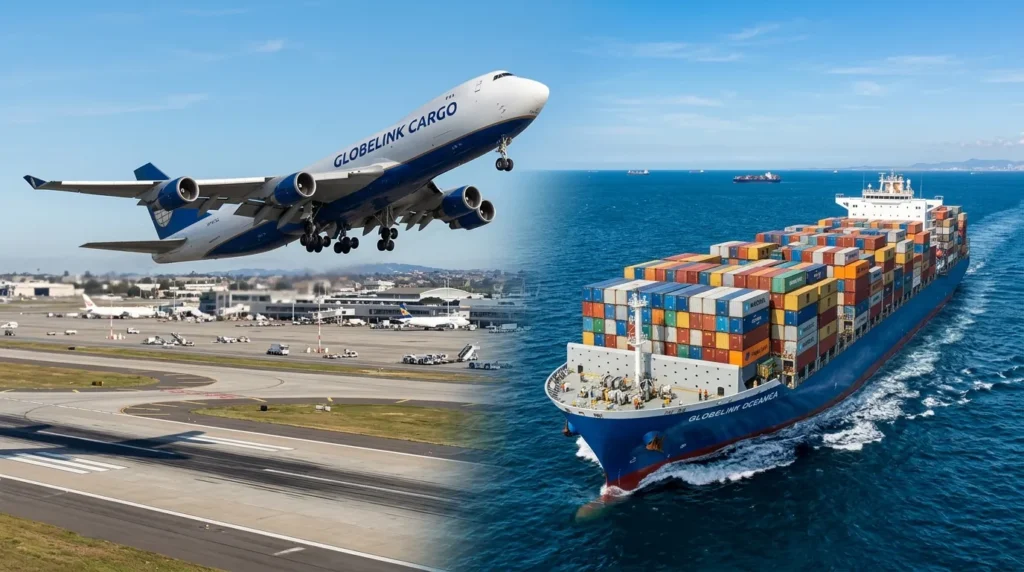
Air Freight
Best for time-sensitive, high-value, or perishable international cargo. Dubai’s DXB and DWC airports offer some of the most extensive air cargo networks in the world, connecting to hundreds of destinations within days.
Sea Freight (FCL & LCL)
The most cost-effective option for bulk international shipments. Full Container Load (FCL) suits large volumes, while Less than Container Load (LCL) lets smaller shipments share container space with other cargo.
Land Freight (GCC & Cross-Border)
For shipments to neighboring GCC countries — Saudi Arabia, Oman, Qatar, Bahrain, Kuwait — road freight is often faster and more economical than sea or air for regional distribution.
Together, these services make up the bulk of international cargo services offered by Dubai-based providers, and most established companies offer at least two of the three modes.
International Shipping from Dubai — Key Routes & Corridors
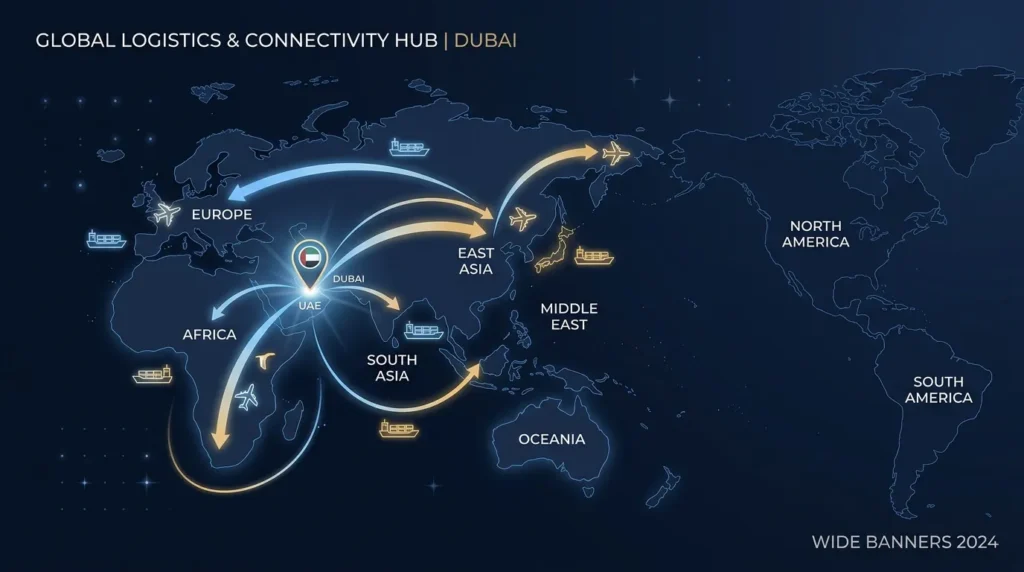
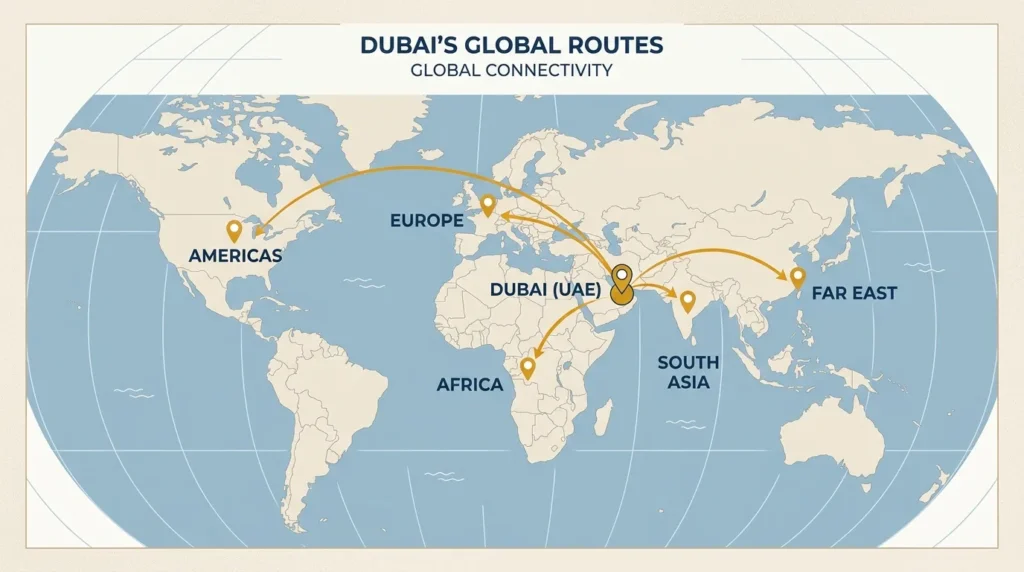
Dubai’s location gives it strong, high-frequency shipping lanes to nearly every major global region. Common routes for international shipping from Dubai include:
- Dubai to South Asia (India, Pakistan, Bangladesh) — high-frequency air and sea routes, often 4–10 days by sea
- Dubai to Africa (Nigeria, Kenya, South Africa, Egypt) — Dubai serves as a major re-export hub for African markets
- Dubai to Europe — strong air freight capacity into major EU hubs, sea freight typically 15–25 days
- Dubai to the Far East (China, Southeast Asia) — used for both import and re-export flows
- Dubai to the Americas — longer transit times but well-served by major carriers for both air and sea
Route availability and transit time vary by provider, so it’s worth confirming actual sailing/flight schedules rather than relying on generic estimates when booking.
International Cargo Services in Abu Dhabi
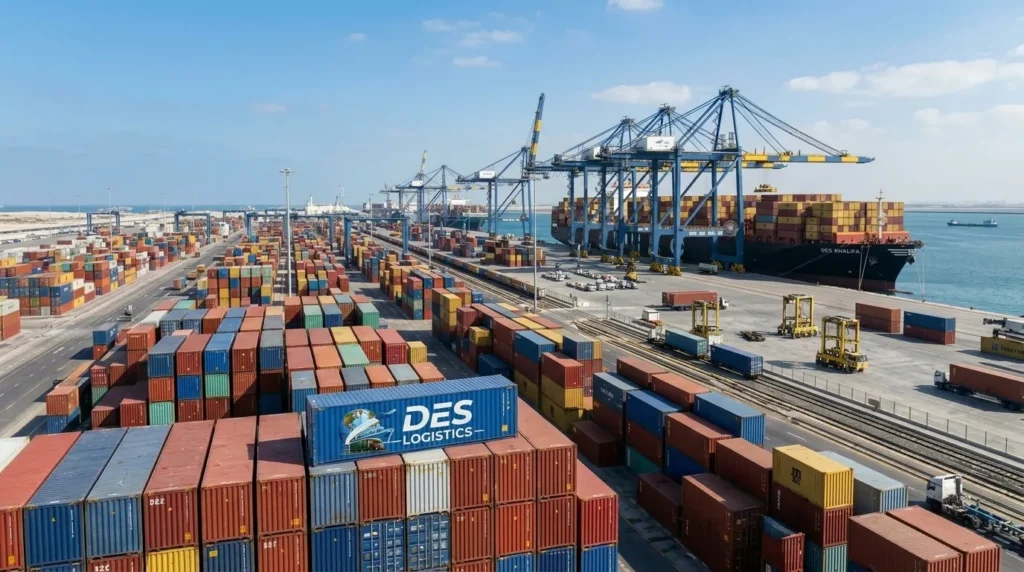
While Dubai handles the largest share of the UAE’s shipping volume, international cargo services in Abu Dhabi have grown significantly, particularly around Khalifa Port and Zayed Port. Abu Dhabi-based international shipping tends to serve:
- Industrial and energy-sector exports (oil & gas equipment, machinery)
- Government and semi-government logistics contracts
- Businesses that prefer proximity to the capital’s free zones (such as KIZAD)
If your operations are based in Abu Dhabi, it’s often more efficient to work with a provider that has a direct presence there rather than routing everything through Dubai, especially for regular or high-volume shipments.
International Cargo Services in Abu Dhabi
While Dubai handles the largest share of the UAE’s shipping volume, international cargo services in Abu Dhabi have grown significantly, particularly around Khalifa Port and Zayed Port. Abu Dhabi-based international shipping tends to serve:
- Industrial and energy-sector exports (oil & gas equipment, machinery)
- Government and semi-government logistics contracts
- Businesses that prefer proximity to the capital’s free zones (such as KIZAD)
If your operations are based in Abu Dhabi, it’s often more efficient to work with a provider that has a direct presence there rather than routing everything through Dubai, especially for regular or high-volume shipments.
How to Choose the Right International Shipping Company
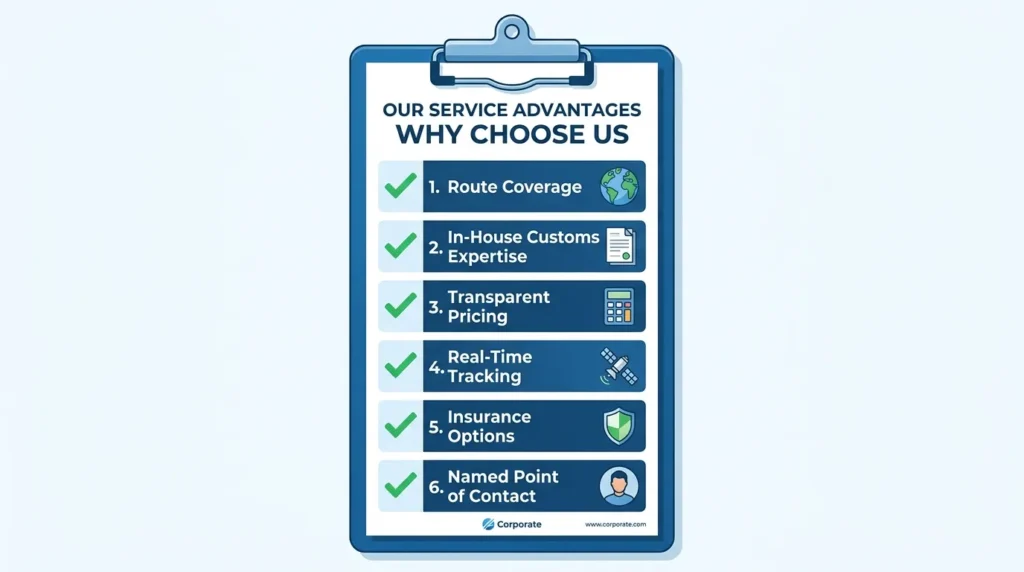
With dozens of providers to choose from, use this checklist to narrow your options:
- Route coverage — Confirm they have established, reliable service to your specific destination, not just a generic “we ship worldwide” claim.
- In-house customs expertise — International shipments involve customs at both ends; a provider with direct customs experience avoids unnecessary delays.
- Transparent, itemized pricing — Freight cost, customs fees, insurance, and handling charges should be broken down clearly.
- Real-time tracking — You should be able to see where your shipment is at any point, not just get updates when something goes wrong.
- Insurance options — International shipments carry more risk over longer distances; confirm what’s covered.
- Communication and account ownership — A named contact who understands your shipment history is far more useful than a rotating support queue.
What Affects International Freight Shipping Costs
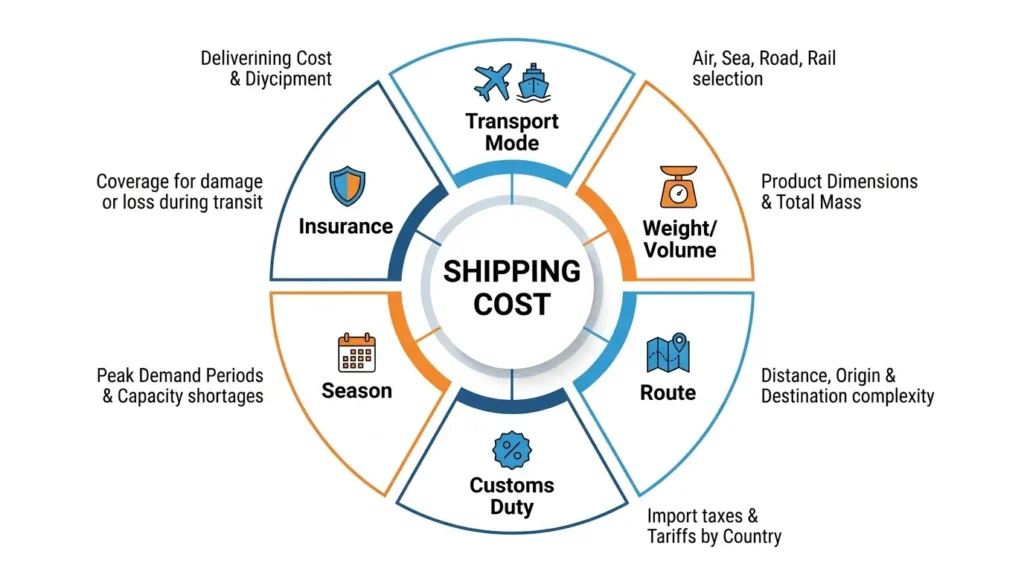
International freight shipping and international shipping pricing depend on several factors:
- Mode of transport — Air costs significantly more per kilo than sea, but delivers far faster
- Weight vs. volume — Carriers charge based on whichever is greater (actual or volumetric weight)
- Distance and route — Direct services generally cost more than routes involving transshipment
- Customs duties — Vary by destination country and product category
- Seasonal demand — Peak shipping periods can significantly raise freight rates
- Insurance and value-added services — Additional protection and handling add to the base cost but reduce risk of major loss
Always request a full, itemized quote tied to your specific shipment rather than comparing generic advertised rates between providers.
Documents You’ll Typically Need
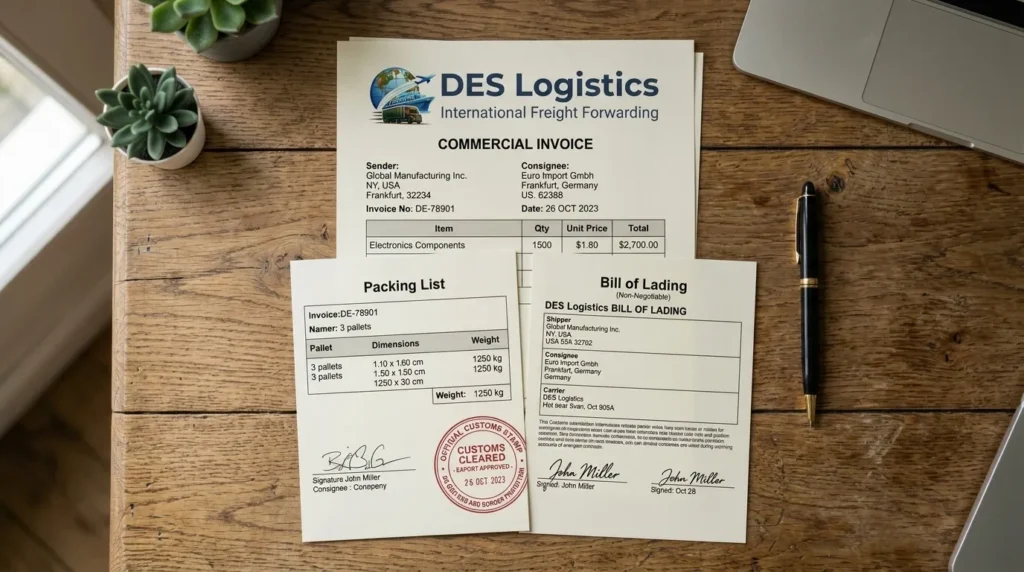
- Commercial invoice
- Packing list
- Bill of lading (sea) or Air Waybill (air)
- Certificate of origin (where required)
- Export/import permits for regulated goods
- Valid trade license (for commercial shipments
Frequently Asked Questions
What’s the difference between an international freight agency and a shipping company? A freight agency typically arranges and coordinates shipping on your behalf without owning the transport assets, while a shipping company may operate its own fleet or vessels. Many providers in Dubai combine both functions.
How long does international shipping from Dubai take? It depends on the destination and mode. Air freight typically takes a few days, while sea freight can range from 4–10 days to nearby regions like South Asia, up to 25–40 days for farther destinations like the Americas or parts of Africa.
Is sea freight or air freight cheaper for international shipping? Sea freight is significantly cheaper per kilo and suits bulk, non-urgent shipments, while air freight costs more but delivers in a fraction of the time — ideal for high-value or time-sensitive cargo.
Do international shipping companies handle customs clearance? Most established providers manage customs documentation and clearance as part of their service, but the shipper remains responsible for ensuring the underlying information (invoice value, product classification) is accurate.
Are there good international shipping options based in Abu Dhabi? Yes — while Dubai handles the largest volume, several providers offer dedicated international cargo services through Abu Dhabi’s Khalifa Port and Zayed Port, which can be more efficient for businesses based in the capital.
What documents do I need for international shipping from the UAE? At minimum, a commercial invoice, packing list, and bill of lading or air waybill. Additional permits or certificates of origin may be required depending on the product and destination country.
Final Thoughts
Choosing the right international shipping company in Dubai comes down to matching their route coverage, mode of transport, and customs expertise to what you’re actually shipping — and where it’s going. Whether you need an international freight agency to coordinate a complex multi-leg shipment, a maritime logistics specialist for bulk sea freight, or a transport company with strong GCC road coverage, use the breakdowns and checklist above to compare providers on equal footing rather than choosing based on brand recognition alone.