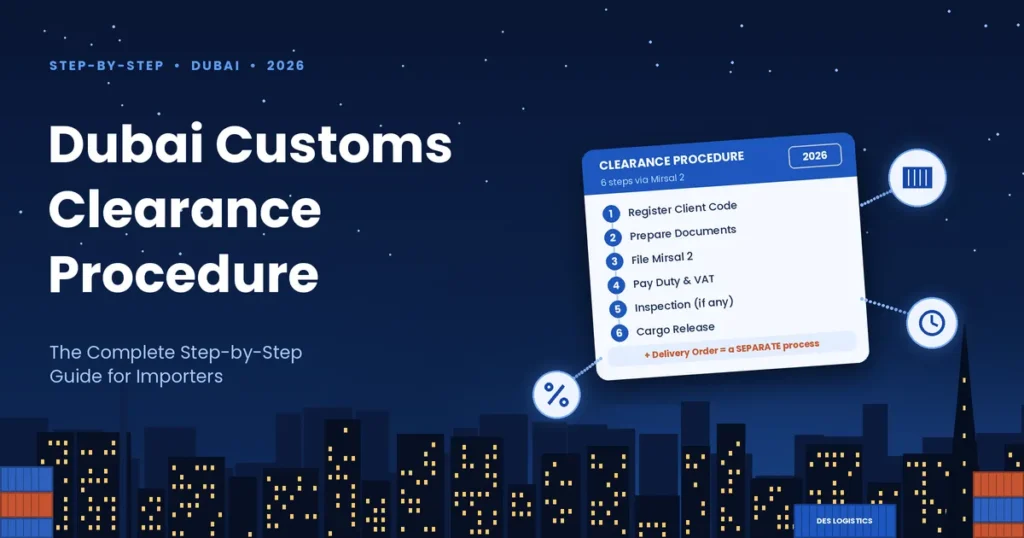
The Dubai customs clearance procedure is a defined, predictable process — but most importers only realize how predictable it is after their first shipment gets delayed by something entirely avoidable. This guide walks through every step, a distinction almost no other guide makes clearly (the difference between your customs declaration and your Delivery Order), and the free zone nuance that trips up businesses moving goods to the mainland.
Step 1: Register for a Customs Client Code
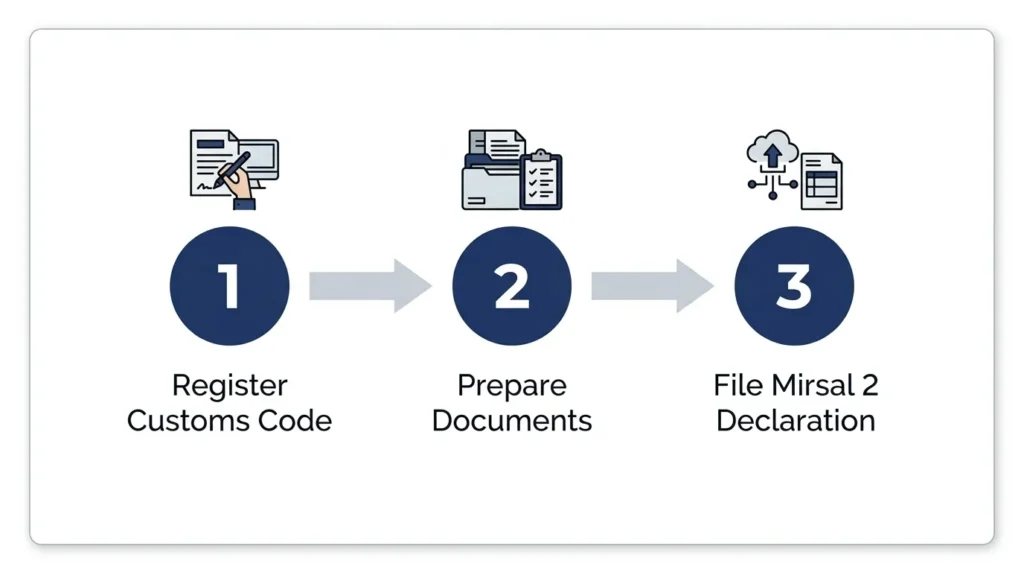
Before you can clear any shipment, your business needs a Customs Client Code, obtained by registering your valid UAE trade license on the Dubai Trade portal. This is a one-time setup per business entity, plus a digital certificate required to file electronic declarations through the Mirsal 2 system.
Step 2: Prepare Your Documents
Every shipment needs a complete, internally consistent set of documents before it reaches port:
- Commercial invoice
- Packing list
- Bill of lading or airway bill
- Certificate of origin
- Any category-specific import permits
Step 3: File the Declaration Through Mirsal 2
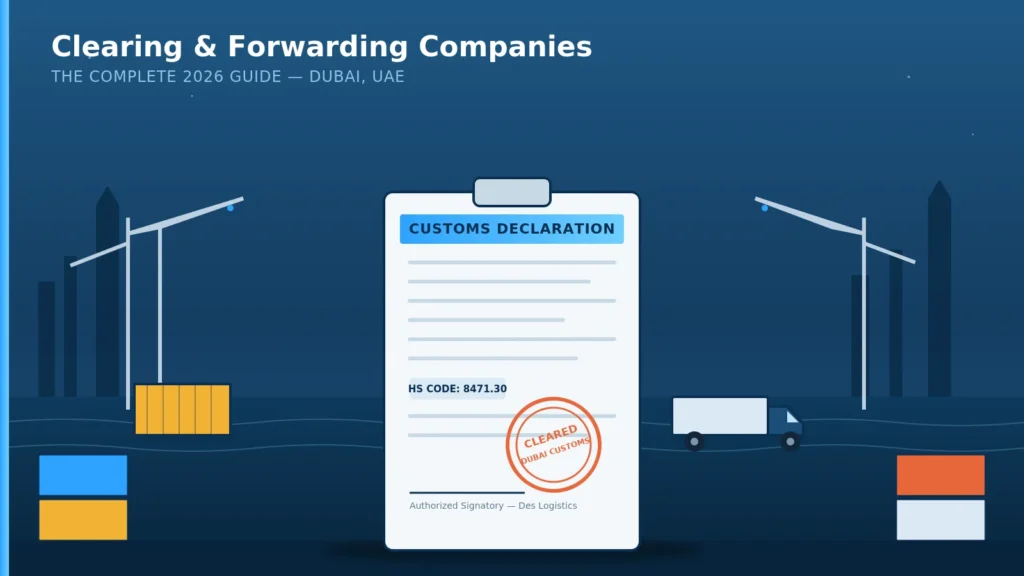
Your customs declaration is submitted electronically, entering detailed shipment information — cargo value, description, origin, and intended use. The Mirsal 2 system automatically checks this data against customs regulations.
Step 4: Pay Duty and VAT
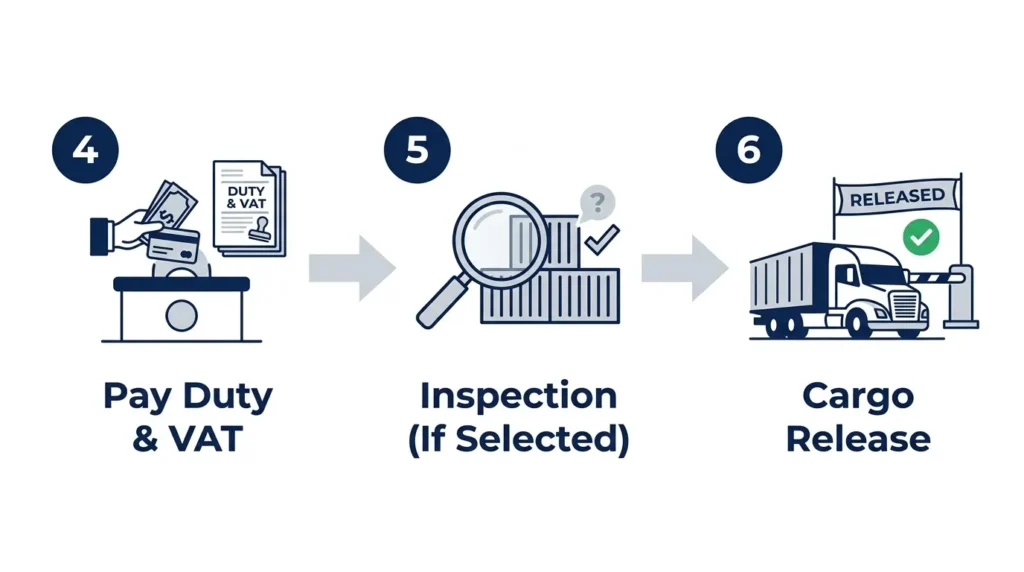
Once your declaration is accepted, applicable customs duty (standard rate around 5% of CIF value for most goods) and 5% VAT are calculated and paid online.
Step 5: Inspection (If Selected)
Some shipments are selected for physical inspection based on risk criteria. This can add 3–5 working days if your shipment is flagged.
Step 6: Cargo Release
Once duty and VAT are settled and inspection (if any) is cleared, Dubai Customs authorizes the release of your cargo.
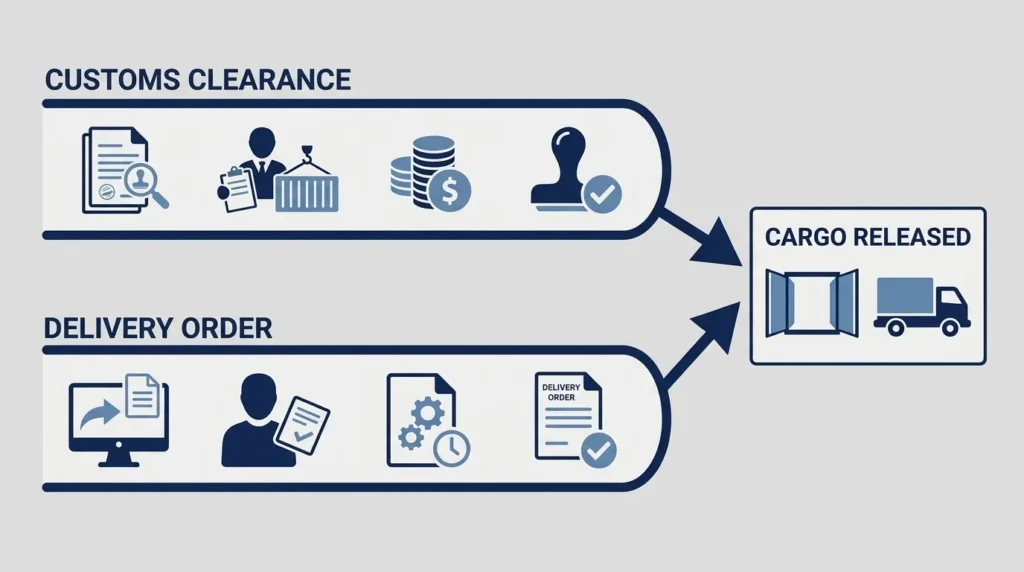
The Step Most Guides Miss: The Delivery Order Is a Separate Process
Here’s the distinction that causes the most confusion for first-time importers: customs clearance and the Delivery Order (D/O) are two parallel processes, not one. The Delivery Order is the document that authorizes the port terminal to physically release your cargo — issued by the shipping line or freight forwarder once the bill of lading is surrendered and all freight charges are settled. Both the customs declaration and the D/O must be completed before your cargo can move. Importers who focus entirely on the customs side and forget the D/O often find their shipment “customs cleared” but still stuck at the terminal.
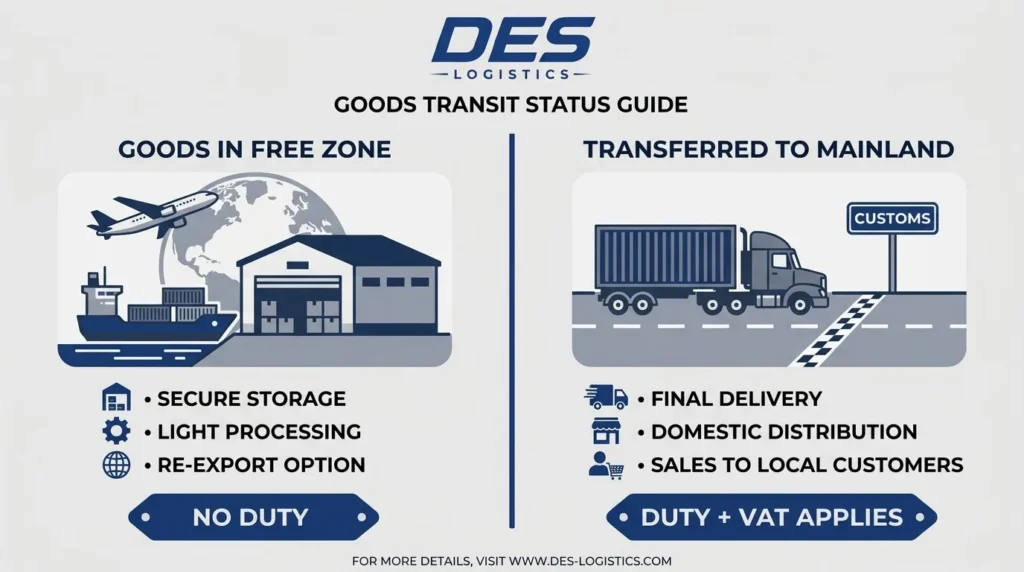
Free Zone vs. Mainland: A Critical Nuance
Goods entering a free zone (such as JAFZA or DAFZA) are exempt from standard customs duty as long as they remain within the free zone. Duty and VAT only become payable once goods move from the free zone into the UAE mainland — this transfer requires its own formal declaration and payment of applicable charges, separate from the initial free zone entry.
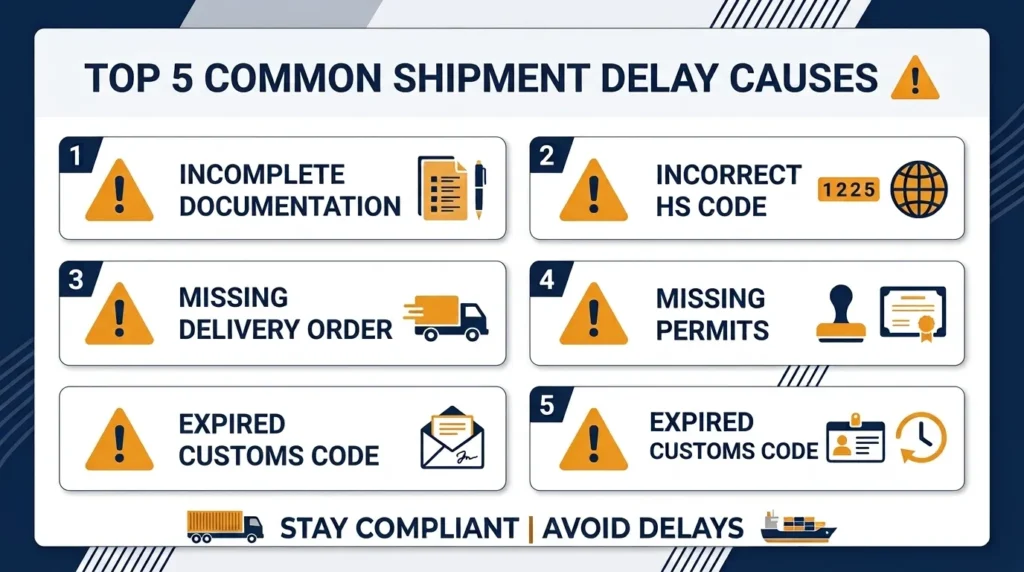
Common Reasons Shipments Get Delayed
- Incomplete or inconsistent documentation across the invoice, packing list, and bill of lading
- Incorrect HS code classification (see our full HS Code Guide for how to classify correctly)
- Forgetting the Delivery Order is a separate requirement from customs clearance
- Missing category-specific permits for regulated goods
- Expired or unregistered Customs Client Code
Frequently Asked Questions
What is the Dubai customs clearance procedure? It’s the official process of registering as an importer/exporter, submitting documentation, filing an electronic declaration through Mirsal 2, paying duty and VAT, and receiving authorization for cargo release.
How long does the customs clearance procedure take in Dubai? With complete documentation, standard clearance typically takes 1–3 working days. Shipments selected for physical inspection can take an additional 3–5 working days.
What is the difference between customs clearance and a Delivery Order? Customs clearance authorizes your goods for legal entry or exit; the Delivery Order authorizes the port terminal to physically release the cargo. Both must be completed independently before cargo can move.
Do free zone goods need to go through the same customs clearance procedure? Goods that remain within a free zone are exempt from standard duty, but any transfer to the mainland requires its own formal declaration and duty payment — it isn’t automatically covered by the initial free zone entry.
What happens if my HS code classification is wrong? Misclassification can lead to reassessed duty, a corrected declaration, or delays — always verify your HS code before filing.
Final Thoughts
The Dubai customs clearance procedure is straightforward once you understand it — but the businesses that avoid delays are the ones who prepare documentation completely upfront, track their Delivery Order separately from their customs declaration, and understand exactly how the free zone-to-mainland transfer works. For a full cost breakdown of each step, see our Customs Clearance Cost guide.