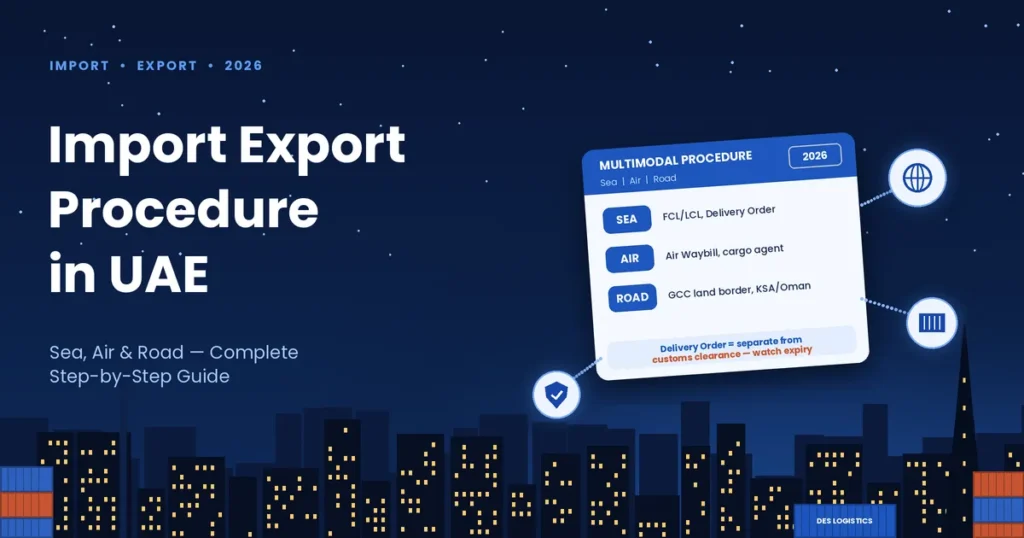
The import export procedure in UAE involves more than customs clearance alone — it spans banking and trade finance, booking transport, documentation at both ends of the shipment, and mode-specific steps depending on whether you’re moving goods by sea, air, or road. This guide walks through the full procedure for both importing and exporting, plus what changes when free zones are involved.
Before You Begin: Registration Requirements
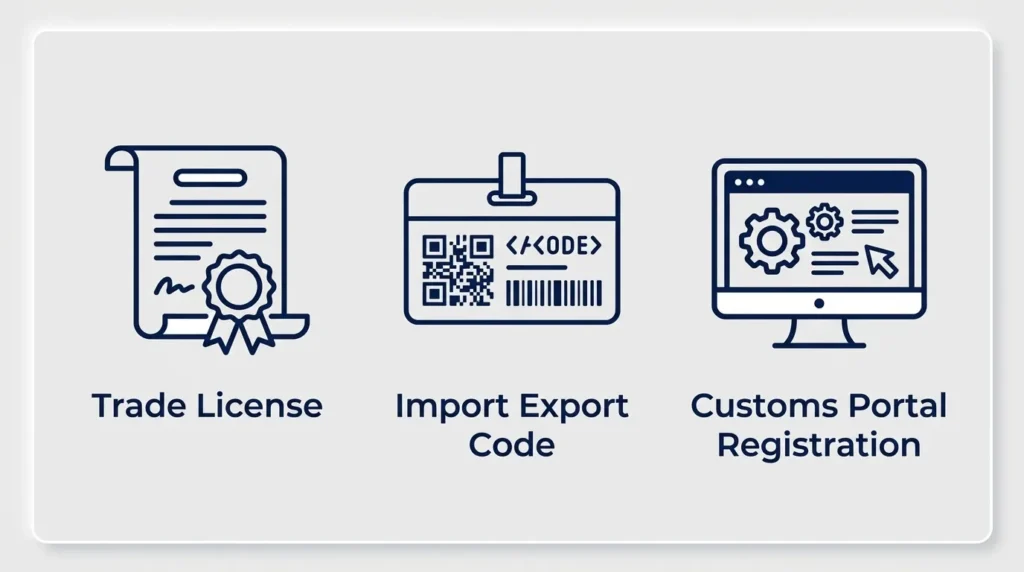
Before any shipment moves, your business needs:
- A valid UAE trade license with import/export activities listed
- An Import Export Code (Customs Client Code), issued by the customs department of the emirate where your company is registered
- Registration on the Dubai Trade portal (or the relevant emirate’s customs portal)
This applies whether you’re planning UAE import export activity from the mainland or through a free zone.
Import Procedure: Full Container Load (FCL) by Sea
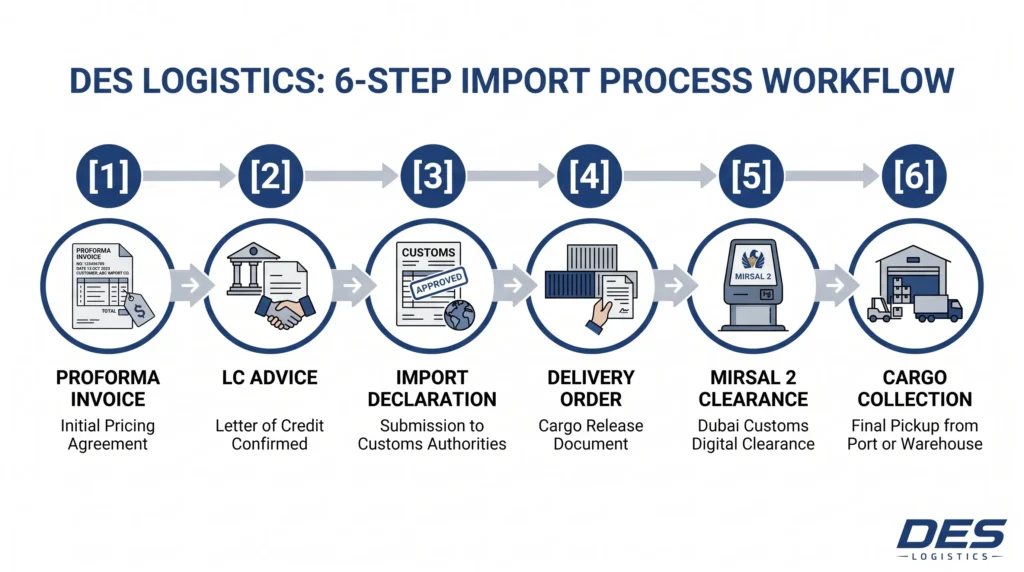
- Receive the proforma invoice from the exporter and process letter of credit (LC) opening charges with your bank, if applicable
- Advise LC opening to the exporter’s bank
- Submit the import declaration and pay applicable customs charges
- Once the bill of lading is surrendered, the shipping agent issues a Delivery Order — note its expiry date, as all clearance formalities must be completed before it lapses
- Complete customs declaration through Mirsal 2, pay duty and 5% VAT
- Collect goods from the port or arrange onward transport
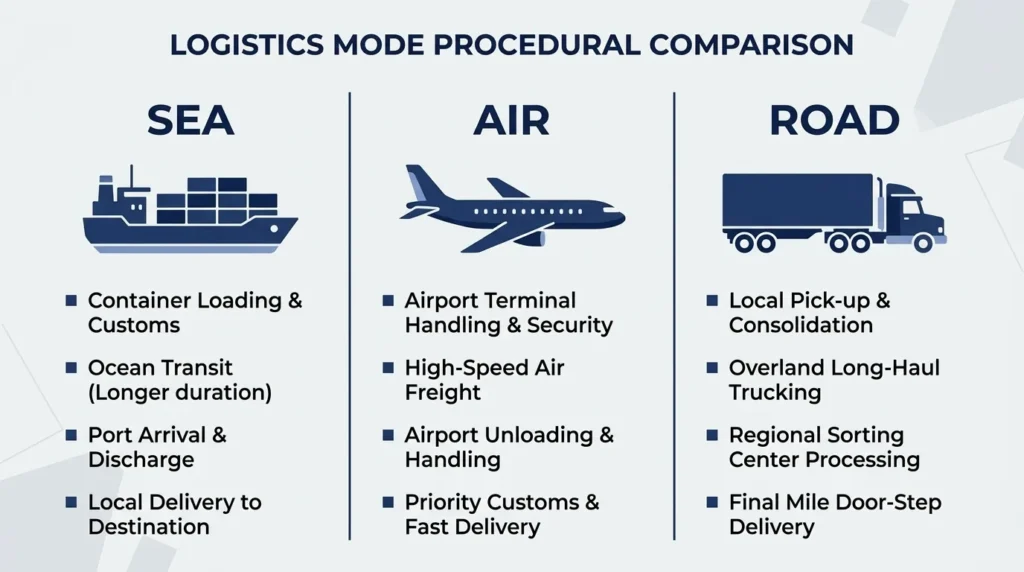
Export Procedure by Sea
- Make an export booking with a shipping agent, who books container space and requests an empty container release
- Nominate a hauler or arrange your own truck to collect the empty container — for self-collection, generate an electronic token through the Dubai Trade portal to secure a pickup slot
- Complete the online Export Declaration, including cargo details and invoice particulars
- Obtain any required permits or certificates (e.g., from the Chamber of Commerce) depending on cargo type
- Submit shipping instructions and complete the customs export process
Import and Export by Air
Air shipments follow a similar documentation logic but move faster and require particular attention to package size, packaging suitability, and accurate labeling. Working with a cargo agent or freight forwarder for the Air Waybill and airline booking is standard practice — see our guide on Cargo Agents in Dubai above for how that role works.
Import and Export by Road
Given the UAE’s land borders with Saudi Arabia and Oman, road transport is a viable option for both import and export, particularly for GCC trade. The importer or exporter provides the same core documentation (commercial invoice, packing list, certificate of origin) with declarations processed at the relevant land border customs point.
Free Zone Import and Export Procedures
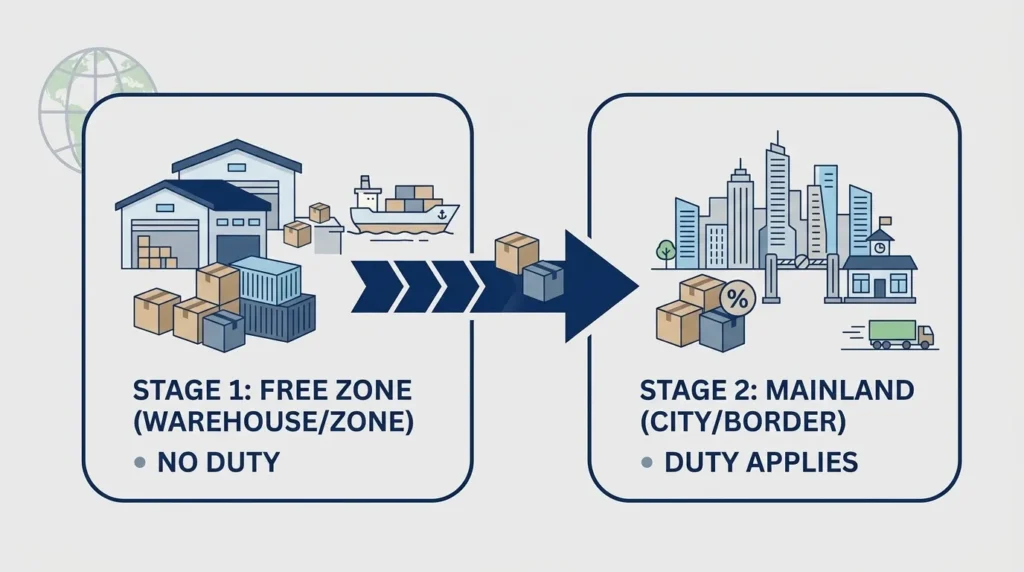
Importing or exporting through a UAE free zone changes part of the procedure: goods can move into a free zone without incurring standard mainland duty. However, moving goods from a free zone to the UAE or GCC mainland triggers its own declaration and duty payment — this transfer is treated as a distinct customs event, not an extension of the original free zone entry.
Documents Required Across Most Import/Export Transactions
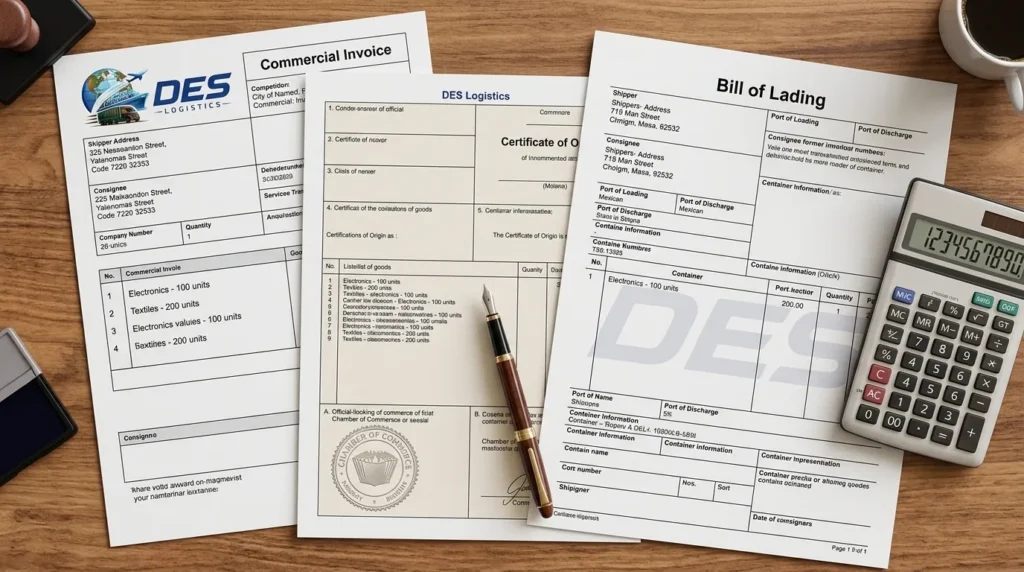
- Commercial invoice
- Packing list
- Certificate of origin
- Bill of lading or Air Waybill
- Valid trade license
- Category-specific permits (where applicable)
Frequently Asked Questions
What is the basic import export procedure in the UAE? It involves registering for a trade license and Import Export Code, preparing shipment documentation, filing a customs declaration through Mirsal 2, paying duty and VAT, and completing a separate Delivery Order process before cargo can be released or shipped.
What’s different about import and export in UAE free zones? Goods can enter a free zone without incurring standard duty, but transferring them to the UAE mainland or elsewhere in the GCC requires a separate declaration and duty payment at that point.
Do I need a letter of credit for UAE imports? Not always — it depends on the payment terms agreed with your supplier. LC-based FCL sea imports follow a specific documentary sequence, but many shipments are handled through simpler payment terms.
How is exporting by sea different from exporting by air? Sea exports involve booking container space and managing empty container logistics with a shipping agent, while air exports focus more on packaging, labeling, and Air Waybill documentation through a cargo agent.
Can I handle the import export procedure without a broker or agent? Yes, if your business is registered and has the necessary customs codes, but most companies work with a customs broker, clearing agent, or freight forwarder to manage documentation and reduce the risk of costly errors — see our guide to Import Export Companies in Dubai for how to choose one.
Final Thoughts
The import export procedure in UAE is well-defined but has more moving parts than customs clearance alone — registration, mode-specific steps, and the free zone-to-mainland transfer all matter. Getting each stage right the first time is what separates a smooth trade operation from one constantly chasing delayed shipments.