Shipping & Cargo Companies in Dubai all promise the same thing — but search “shipping companies in Dubai” and you’ll get the same result every time: a “Top 10” list where the company that wrote the article conveniently ranks itself #1, followed by nine competitors described in two generic sentences each. That’s not actually useful if you’re trying to figure out who to trust with your cargo, your car, or your business’s supply chain.
This guide takes a different approach — instead of just naming shipping and cargo companies in Dubai, it explains what actually separates a good provider from an average one, what categories exist, and what questions to ask before signing a contract. By the end, you’ll be able to evaluate any company, including the ones on this page, with real criteria instead of marketing copy.
Why Dubai Is the Region’s Shipping Hub
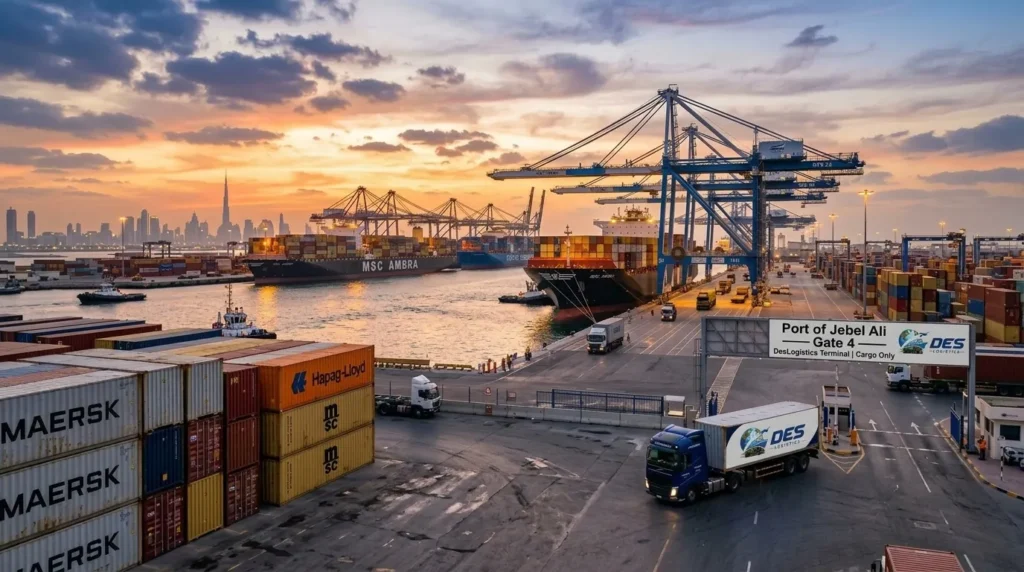
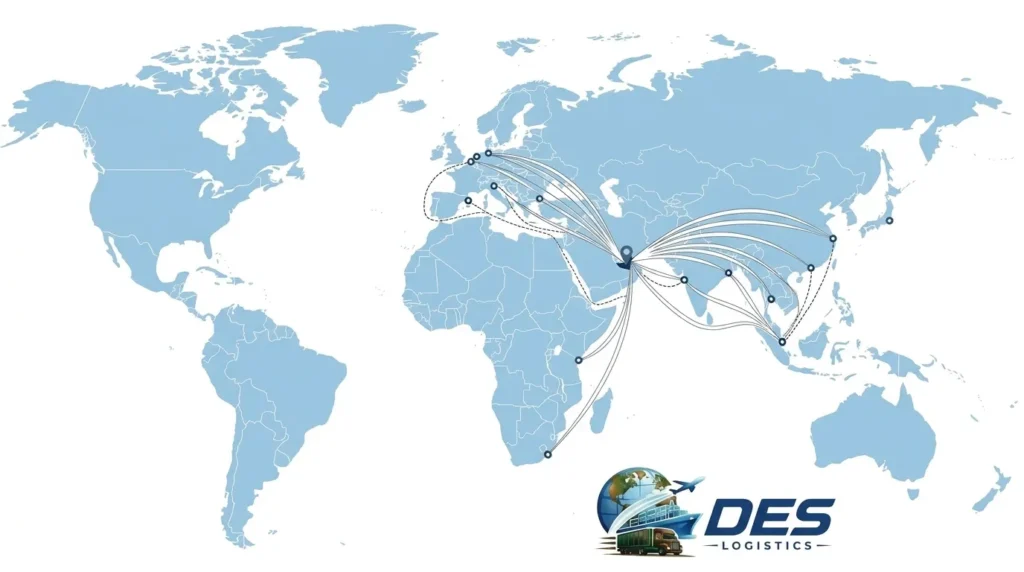
Dubai’s position between Europe, Asia, and Africa — combined with Jebel Ali Port (one of the largest man-made ports in the world) and a free-zone-friendly regulatory environment — has made it the natural base for shipping and cargo companies serving the entire GCC and beyond. This is also why the market is crowded: hundreds of companies operate here, ranging from single-office freight brokers to multinational logistics giants.
That density is good for competition and pricing, but it also means the “Top 10” you find on Google is often just a marketing list rather than a genuine comparison.
Types of Shipping & Cargo Companies in the UAE
Before comparing names, it helps to understand that “shipping company” covers several different business models. Knowing which one you actually need saves a lot of wasted quote-requests.
1. Asset-Based Carriers
These companies own their own ships, trucks, or warehouses. They tend to offer more control over pricing and scheduling but usually specialize in fewer routes/services.
2. Freight Forwarders (Non-Asset-Based)
These companies don’t own the ships or planes — they book capacity with carriers on your behalf and manage documentation, consolidation, and customs. Most mid-sized Dubai shipping companies fall into this category, and it’s often the most flexible option for individuals and SMEs.
3. NVOCCs (Non-Vessel Operating Common Carriers)
A specific type of forwarder that issues its own bill of lading and consolidates cargo from multiple shippers into containers — useful for smaller shipments (LCL) that don’t need a full container.
4. Full-Service Logistics & 3PL Providers
Larger companies offering end-to-end supply chain management: freight, warehousing, distribution, and sometimes inventory management — better suited to businesses than individual shippers.
5. Specialized Carriers
Companies focused on a single cargo type — car/RoRo shipping, project cargo (oversized machinery), dangerous goods, or cold chain — where specialized handling matters more than broad service range.
What Separates a Reliable Shipping Company From an Average One
Rather than ranking companies by marketing claims, here’s what actually matters when you’re comparing shipping and cargo companies in Dubai:
| Criteria | What to Check |
| Licensing | Registered with UAE authorities and, for ocean freight, holds an NVOCC or freight forwarding license |
| Track record | Years in operation, published shipment volumes, verifiable Google/Clutch reviews (not just testimonials on their own site) |
| Service scope | Does one company handle air + sea + land + customs, or will you need multiple vendors? |
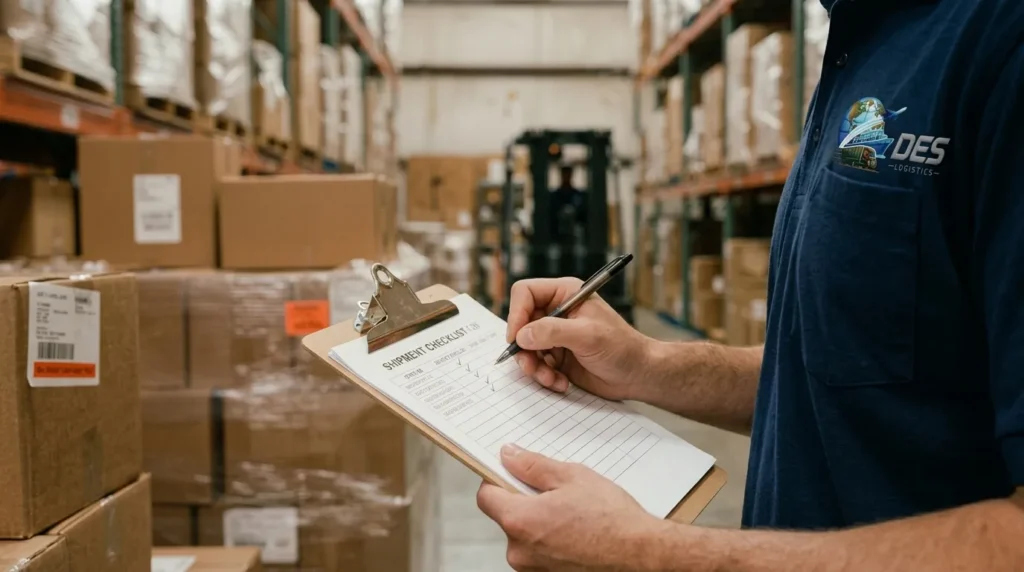
| Transparent pricing | Itemized quotes that separate freight cost, port fees, customs charges, and insurance |
| Tracking | Real-time shipment tracking rather than “call us for updates” |
| Documentation support | Handles export/import paperwork and customs clearance in-house |
| Insurance options | Offers cargo insurance with clear coverage limits, not just “your goods are safe with us” |
| Physical presence | A real office/warehouse in the UAE (not just a website) — matters for accountability if something goes wrong |
Shipping & Cargo Companies in Dubai: By Category
Rather than a single ranked list (which is where every competitor article loses credibility by ranking itself #1), here’s how companies in this space generally group by what they’re best suited for — so you can match the category to your actual need.
Best For General Cargo & Freight Forwarding
Mid-sized freight forwarders that handle air, sea, and land freight together, usually with in-house customs clearance. Best fit for SMEs and traders shipping regularly to specific regions (GCC, Africa, South Asia).
Best For Large-Scale / Enterprise Logistics
Multinational 3PL operators with warehousing, distribution networks, and dedicated account management — suited to businesses needing ongoing supply chain support rather than one-off shipments.
Best For Car & Vehicle Shipping (RoRo/Container)
Specialized providers running RoRo shipping companies in Dubai alongside container options — important if your cargo is vehicles rather than general goods, since handling, insurance, and documentation differ significantly from standard freight. (See our dedicated Auto Shipping Companies guide for more.)
Best For Small Shipments (LCL/NVOCC)
NVOCC operators who consolidate smaller loads into shared containers — the most cost-effective route if you don’t have enough cargo to fill a full container.
Best For Regional GCC Shipping
Companies with strong land freight networks to Saudi Arabia, Oman, Qatar, Kuwait, and Bahrain —often faster and cheaper than sea freight for regional trade. (See our Land Transport Companies guide for GCC route details.)
Regional Coverage Across the UAE
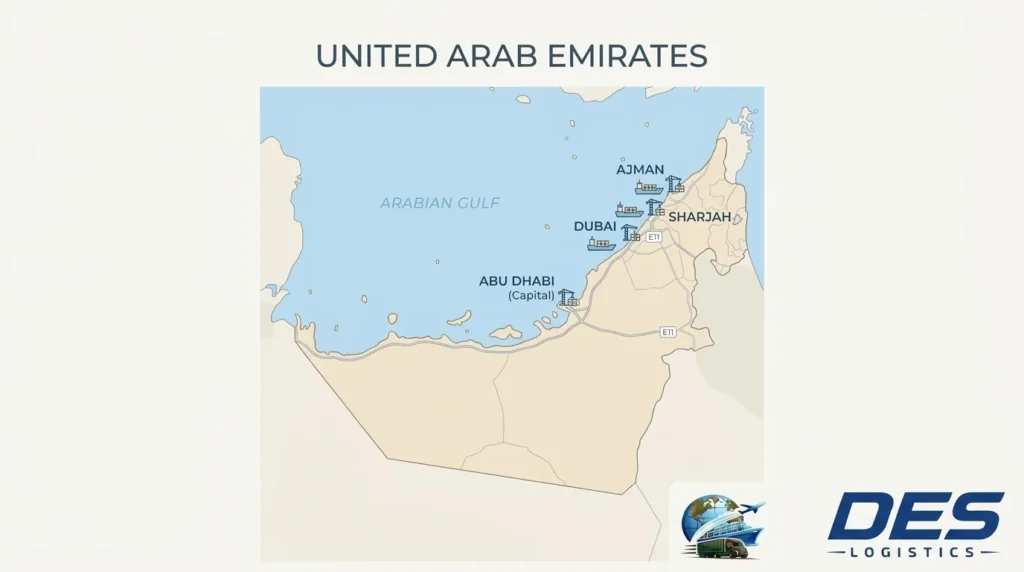
While Dubai has the highest concentration of shipping companies, coverage across Abu Dhabi, Sharjah, and the other emirates varies by provider. For a full breakdown of regional cargo coverage — including Khalifa Port in Abu Dhabi and warehousing options in Sharjah — see our Cargo Companies in Dubai guide. The short version: if you’re searching for “shipping companies near me” outside Dubai, confirm whether a company has an actual local office/agent in your emirate — this affects pickup speed and how quickly issues get resolved.
RoRo Shipping Companies in Dubai: What Makes Them Different
Since car and vehicle shipping keeps coming up as a distinct need, it’s worth calling out separately. RoRo (Roll-on/Roll-off) shipping companies in Dubai specialize in loading vehicles directly onto a ship rather than packing them into containers. This matters because:
- Vehicles need different securing equipment (wheel chocks, lashing straps) than palletized cargo.
- Insurance terms for vehicles differ from general cargo insurance.
- Documentation includes vehicle-specific paperwork (registration, ownership transfer, export permits) on top of standard shipping documents.
If a shipping company lists car shipping as just one line item among dozens of services, it’s worth asking directly how many vehicle shipments they handle monthly — general cargo companies don’t always have the same hands-on experience as RoRo/car-shipping specialists.
Questions to Ask Before Choosing a Shipping Company in Dubai
- Are you licensed as a freight forwarder / NVOCC, and can you share your license number?
- What’s included in this quote — port fees, customs, documentation, insurance?
- Can I track my shipment in real time, and how?
- What happens if my cargo is delayed or damaged — what’s your claims process?
- Do you have your own office/warehouse in the UAE, or do you subcontract?
- Can you provide references or recent verified reviews, not just testimonials on your site?

Frequently Asked Questions
What’s the difference between a shipping company and a freight forwarder? A shipping company (carrier) physically owns and operates the vessels or trucks moving cargo. A freight forwarder books space with carriers on your behalf and manages documentation, customs, and logistics coordination — most companies marketed as “shipping companies in Dubai” are actually freight forwarders.
How do I know if a shipping company in Dubai is legitimate? Check for a valid trade license, physical office address, verifiable Google reviews, and membership in industry bodies (such as NAFL — the National Association of Freight and Logistics). Be cautious of companies that only show testimonials on their own website with no external reviews.
Is it cheaper to use a freight forwarder or book directly with a shipping line? For most individuals and SMEs, freight forwarders are more practical — shipping lines usually deal in full container loads and bulk contracts, while forwarders can consolidate smaller shipments (LCL) and handle documentation you’d otherwise manage yourself.
What is an NVOCC and do I need one? An NVOCC (Non-Vessel Operating Common Carrier) consolidates cargo from multiple shippers into shared containers. If your shipment doesn’t fill a full container, working with an NVOCC is usually more cost-effective than booking a dedicated container.
Do shipping companies in Dubai handle customs clearance? Most established freight forwarders and full-service logistics companies include customs clearance as part of their service — always confirm this is included in your quote rather than assumed.
How do RoRo shipping companies in Dubai differ from regular cargo companies? RoRo shipping companies specialize in vehicle loading and securing, use different insurance structures, and manage vehicle-specific export documentation — general cargo companies may offer it as an add-on but often lack the same specialized experience.
Final Thoughts
The most useful way to choose among shipping and cargo companies in Dubai isn’t picking whoever ranks #1 on a self-published list — it’s matching the type of provider (asset-based carrier, forwarder, NVOCC, or specialist) to what you’re actually shipping, then verifying licensing, transparent pricing, and real customer reviews before committing. Whether you’re moving a single container, a fleet of vehicles, or running an ongoing supply chain, taking the time to ask the right questions upfront is what actually determines whether the shipment goes smoothly.