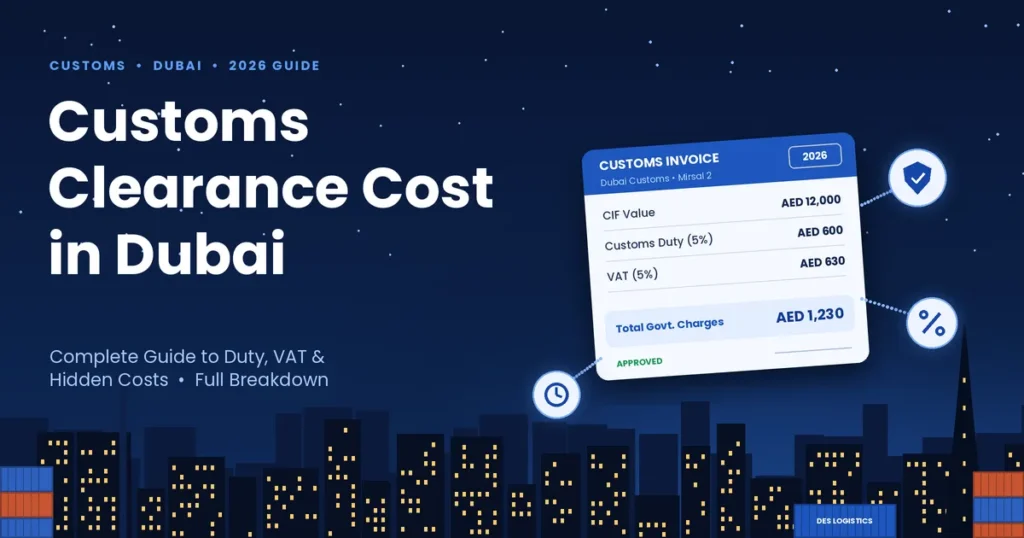
Customs clearance cost in Dubai typically ranges between AED 200 and AED 3,500 per shipment, depending on cargo value, HS code classification, shipment type, and how many days your cargo sits at port before clearing. A small parcel clears for a few hundred dirhams; a full container of commercial goods held up by a documentation error can run into thousands. This guide breaks down exactly where your customs clearance cost comes from, what’s fixed versus variable, and how much of it is actually avoidable. By the end, you’ll know exactly which charges most importers don’t see coming — and how to stay clear of them.
What Determines Customs Clearance Cost
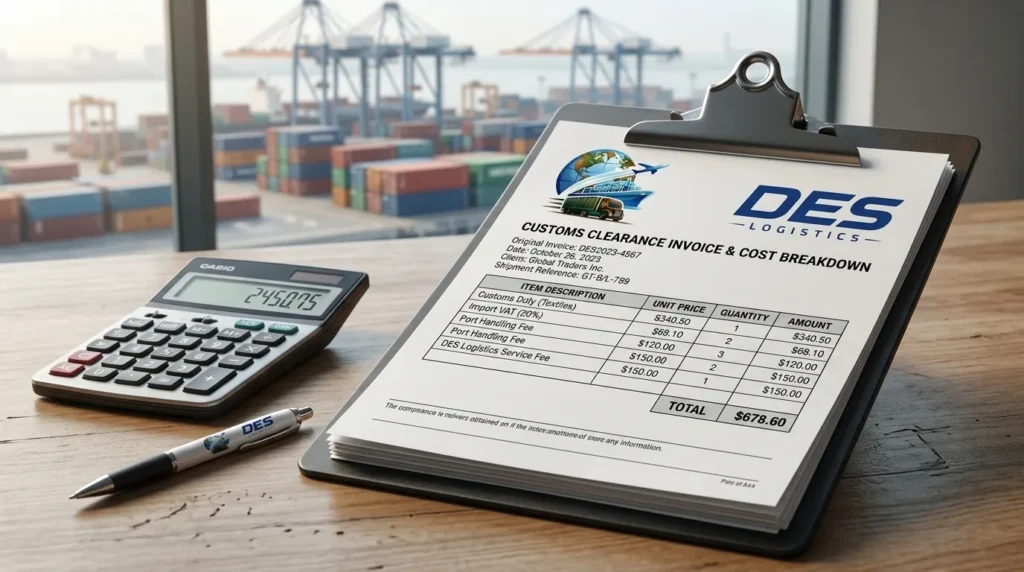
Every customs clearance bill in Dubai is made up of a mix of fixed government charges and variable commercial charges. Understanding which is which helps you know what you can plan for and what you can actually control.
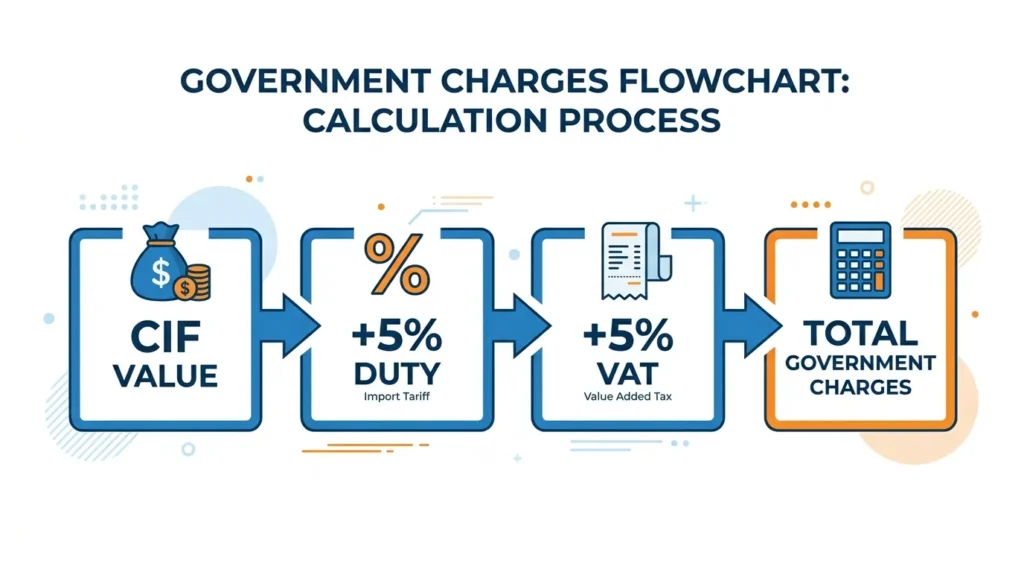
- Customs duty — The standard rate is 5% of the CIF value (Cost + Insurance + Freight), though this varies for certain categories: alcohol is taxed at 50%, tobacco at 100%, while most food staples and pharmaceuticals are duty-free.
- VAT — An additional 5% is charged on the CIF value plus the customs duty already paid. VAT-registered businesses can typically recover this through their VAT return.
- Declaration and documentation fees — Filing a customs declaration through Dubai Customs’ Mirsal 2 system carries a processing fee, separate from duty and VAT.
- HS code classification accuracy — Your declared HS code directly determines your duty rate and whether your shipment qualifies for any exemptions. (See our full HS Code Guide for how to classify correctly.)
- Broker or agent service fees — Unless you’re a registered importer filing declarations yourself, a customs broker or freight forwarder charges a service fee to manage the process.
- Inspection or demurrage charges — Applied only if your shipment is selected for physical examination or delayed past its free storage period.
Cost Comparison by Shipment Type
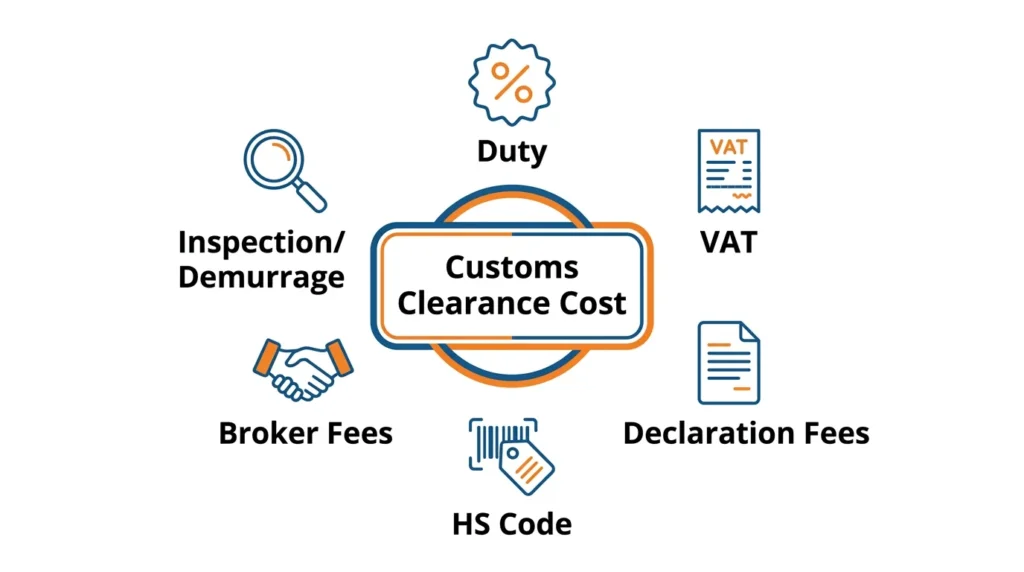
| Shipment Type | Approx. Clearance Cost Range (AED) |
| Personal effects / small parcel | 200 – 500 |
| Commercial LCL shipment | 500 – 1,200 |
| Commercial FCL container | 1,200 – 3,500 |
| Vehicle import clearance | 800 – 2,000 |
| Restricted / special-permit goods | Custom quote |
Note: These are approximate ranges based on typical market rates for standard clearance without complications. Actual costs depend on cargo value, HS code, and whether inspection or storage fees apply — request a quote for your exact shipment.
\
A Worked Example
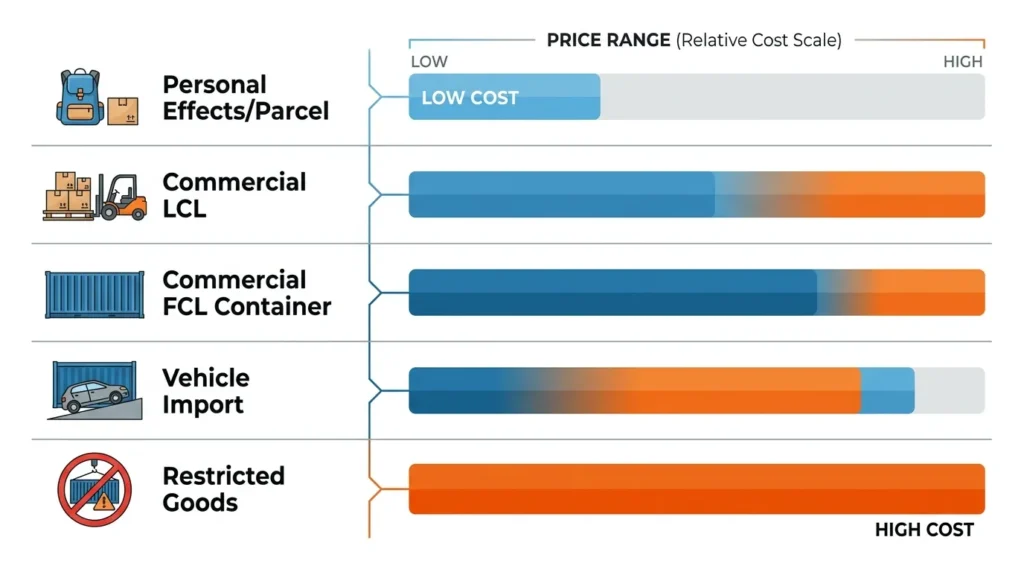
Here’s how the math actually plays out for a typical commercial shipment:
Suppose you’re importing electronics into Dubai with a CIF value of AED 12,000.
- Customs duty (5% of CIF): AED 12,000 × 5% = AED 600
- VAT (5% of CIF + duty): (AED 12,000 + AED 600) × 5% = AED 630
- Total government charges: AED 600 + AED 630 = AED 1,230
This figure excludes broker fees, port handling, and any inspection or storage charges — those are added on top depending on your shipment’s specifics.
Hidden Costs to Budget For
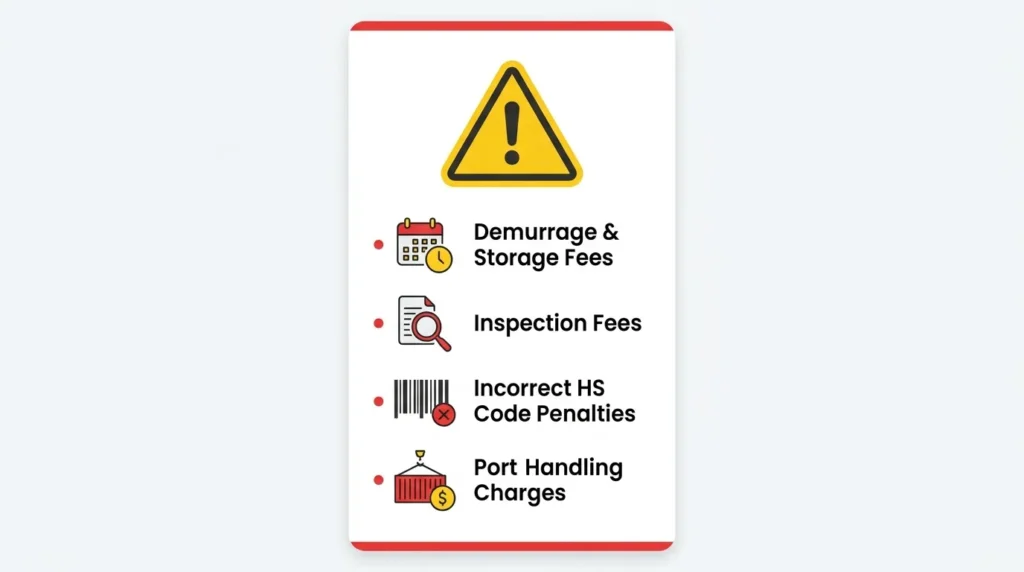
These are the charges that catch most first-time importers off guard, because they only apply under specific conditions:
- Demurrage and storage fees — Ports typically allow a free period (often around 7 days) before charging daily storage, usually AED 50–200 per day per container. A documentation delay that pushes clearance past the free period — even by a few days — can add several hundred dirhams or more before the shipment ever moves.
- Inspection fees — If your shipment is selected for physical examination (Red Channel), expect an additional AED 500–1,000 depending on cargo type, plus 3–5 extra working days.
- Incorrect HS code penalties — Misclassification can trigger a corrected declaration, reassessed duty, or in some cases a compliance penalty — all avoidable with accurate classification upfront.
- Port handling charges — Separate from clearance itself, moving your container within the port can add AED 500–2,000 depending on container size and dwell time.
Free Zone vs. Mainland: Does It Change the Cost?
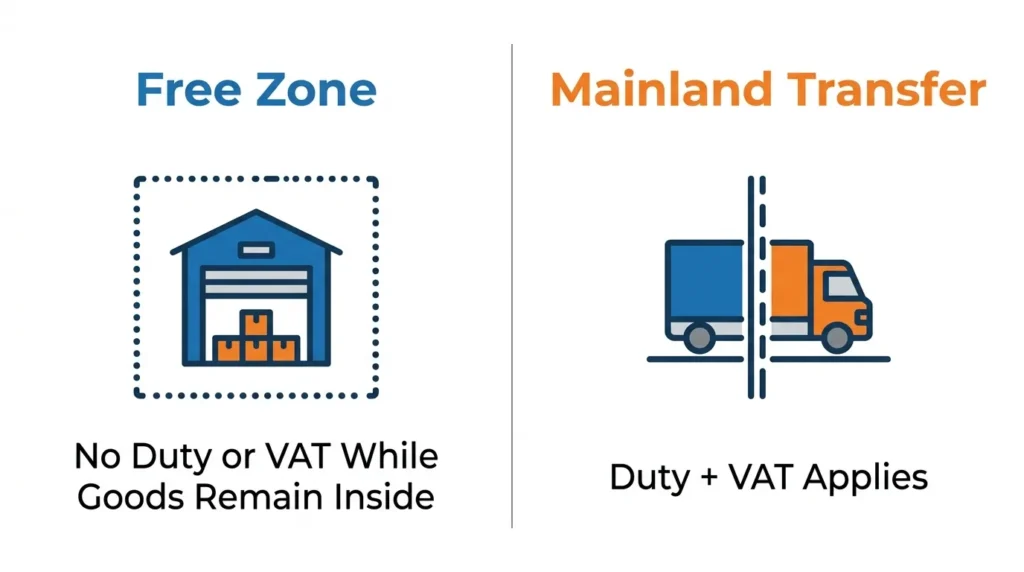
If your goods are imported into and remain within a UAE free zone — such as JAFZA or DAFZA — they are not subject to import duty or VAT as long as they stay in the free zone. Duty and VAT only become payable once goods move from the free zone into the UAE mainland. This is worth factoring in if your business operates through a free zone entity, since it can significantly change your effective clearance cost.
How to Reduce Your Customs Clearance Cost
- Get your HS code classification right the first time. An incorrect code is one of the most common — and most avoidable — causes of delays, reassessments, and penalty costs. Our HS Code Guide walks through how to classify accurately.
- Complete documentation before your cargo arrives. Commercial invoice, packing list, bill of lading, and certificate of origin should all be ready and consistent before your shipment reaches port — this is the single biggest factor in avoiding demurrage.
- Work with an experienced customs broker. A broker who understands Dubai Customs’ documentation standards and the Mirsal 2 system can often clear straightforward shipments within the standard 1–3 working days, avoiding storage charges entirely.
- Track your free storage period. Know exactly how many free days your port or terminal allows, and plan pickup or onward transport before that window closes.
Frequently Asked Questions
How much does customs clearance cost in Dubai? Customs clearance in Dubai typically costs between AED 200 and AED 3,500 per shipment, depending on cargo value, shipment type, HS code classification, and whether inspection or storage charges apply.
What documents are needed for customs clearance? At minimum, you’ll need a commercial invoice, packing list, bill of lading (or air waybill), and a certificate of origin where applicable. Regulated goods may require additional permits.
Do I need a customs broker in the UAE? Not always — registered importers can file declarations themselves through Mirsal 2. However, most businesses without an in-house customs team work with a broker or freight forwarder to avoid classification errors and documentation delays.
What is an HS code and why does it affect cost? An HS code is the classification number that determines your applicable duty rate and whether your shipment qualifies for any exemptions. An incorrect code can lead to reassessed duty or a compliance penalty — see our full HS Code Guide for how to classify correctly.
How long does customs clearance take in Dubai? A standard commercial shipment with complete documentation typically clears in 1–3 working days. Shipments selected for physical inspection (Red Channel) can take an additional 3–5 working days.
Final Thoughts
The real cost of customs clearance in Dubai isn’t just the duty and VAT you can calculate in advance — it’s the demurrage, inspection, and penalty charges that show up when documentation isn’t ready or classification is wrong. Getting your HS code right and your paperwork complete before your cargo arrives is the single most effective way to keep your clearance cost at the lower end of the range.
Not sure what your clearance will cost? Get a free customs clearance quote from DES Logistics.