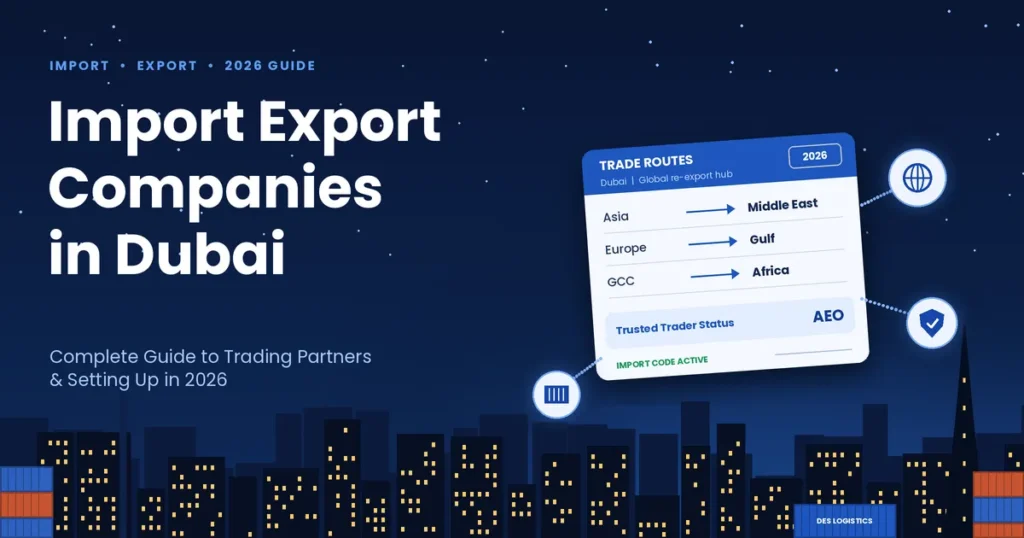
Dubai handles more re-export trade than almost any other city on earth, which means two very different groups search for import export companies in Dubai: businesses looking for a reliable trading partner, and entrepreneurs looking to start their own import-export company. This guide covers both. You’ll find what these companies actually do, the different types operating across the UAE, and how to register your own import code. We’ll also walk through the full compliance picture — customs, duty, and the AEO program most guides skip entirely — plus how to choose the right import export partner for your trade.
What Do Import Export Companies in Dubai Actually Do?
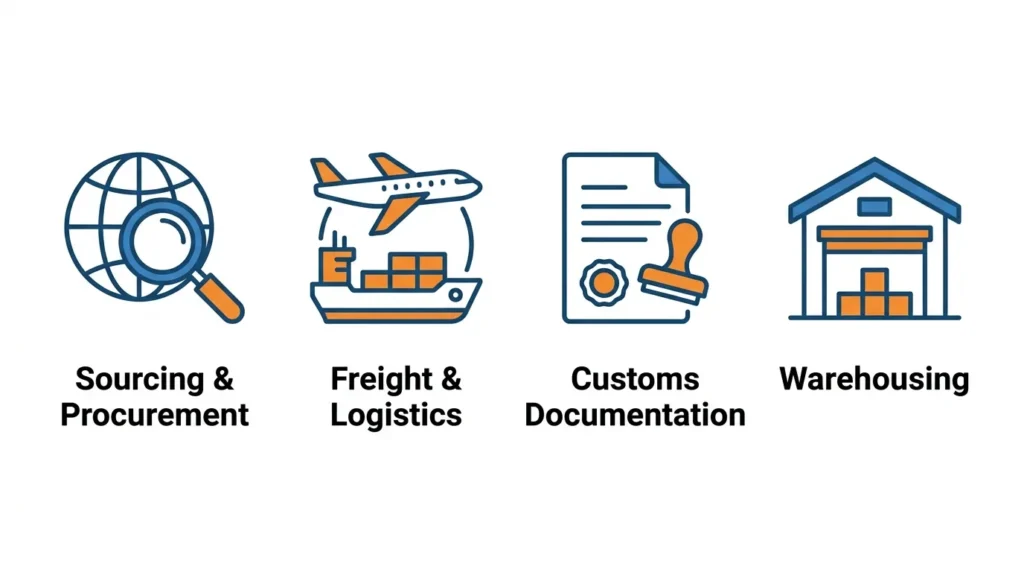
An import export company sources, ships, and manages the trade of goods across borders on behalf of businesses that don’t want to handle every leg of the process themselves. In Dubai specifically, most established companies combine several roles under one roof:
- Sourcing and procurement — Finding suppliers or buyers for specific product categories
- Freight and logistics — Managing air, sea, or land transport for the shipment
- Customs documentation — Preparing declarations, certificates of origin, and compliance paperwork
- Warehousing — Storing goods before distribution, often within a free zone
- Trade financing support — Some larger firms assist with letters of credit and payment terms between international parties
Because Dubai sits at the crossroads of Asia, Africa, and Europe, its import and export companies typically specialize in specific trade lanes — GCC-to-Africa, Asia-to-Middle East, or Europe-to-Gulf — rather than trying to cover every route.
Types of Import Export Companies in Dubai
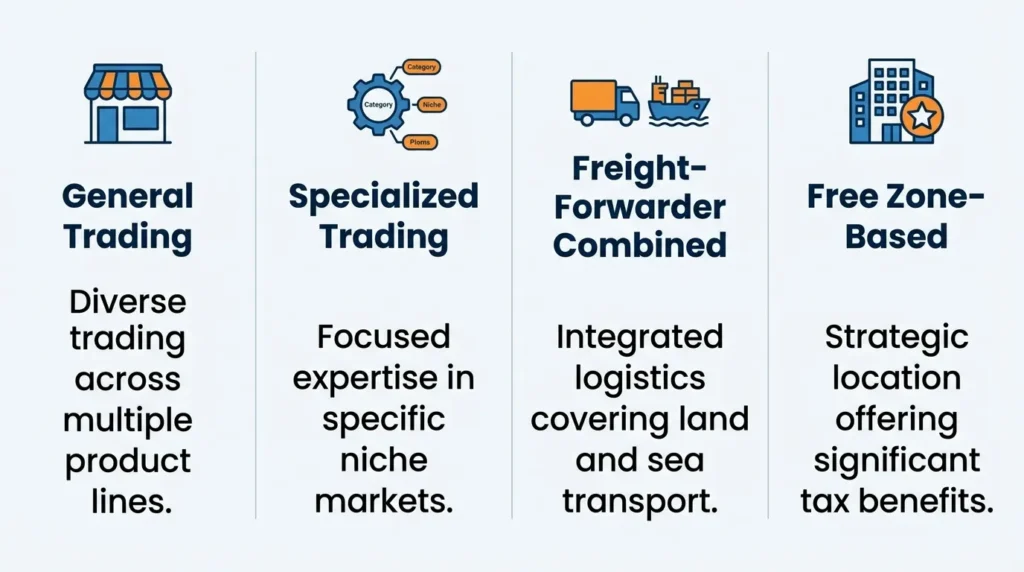
Not every import-export company operates the same way. Understanding the categories helps you find the right fit whether you’re searching for import export companies near me or company types across the wider UAE:
- General trading companies — Hold a broad trade license covering multiple product categories, common for businesses that trade opportunistically across sectors.
- Specialized trading companies — Focus on one category (automotive parts, gold and jewelry, electronics, FMCG, or textiles), usually with deeper supplier networks and category-specific compliance knowledge.
- Freight-forwarder-combined companies — Offer import-export trading alongside logistics and customs clearance, useful if you want one point of contact for the entire supply chain.
- Free zone-based companies — Operate from JAFZA, DMCC, or DAFZA, benefiting from 100% foreign ownership and customs duty exemptions on goods that stay within the free zone.
Export Companies in Dubai — Leading Sectors
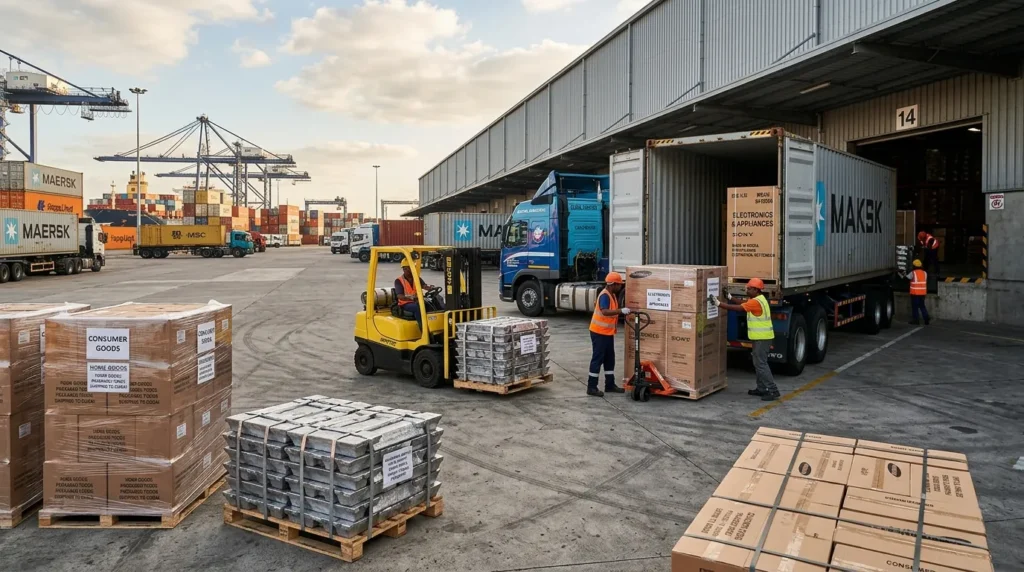
Dubai’s export companies are concentrated in a handful of sectors that consistently dominate UAE trade data. Petroleum-based products account for a large share of total UAE exports, while gold, aluminum, and other metals form a significant secondary category. Beyond raw commodities, importers and exporters in Dubai are increasingly active in electronics, machinery, auto parts, and FMCG goods — categories that benefit directly from Dubai’s re-export infrastructure.
For businesses evaluating importers in Dubai as potential partners, sector specialization matters more than company size: a general trading company with no track record in your specific product category is a bigger risk than a smaller, category-focused firm with established supplier relationships.
Starting an Import Export Business in Dubai
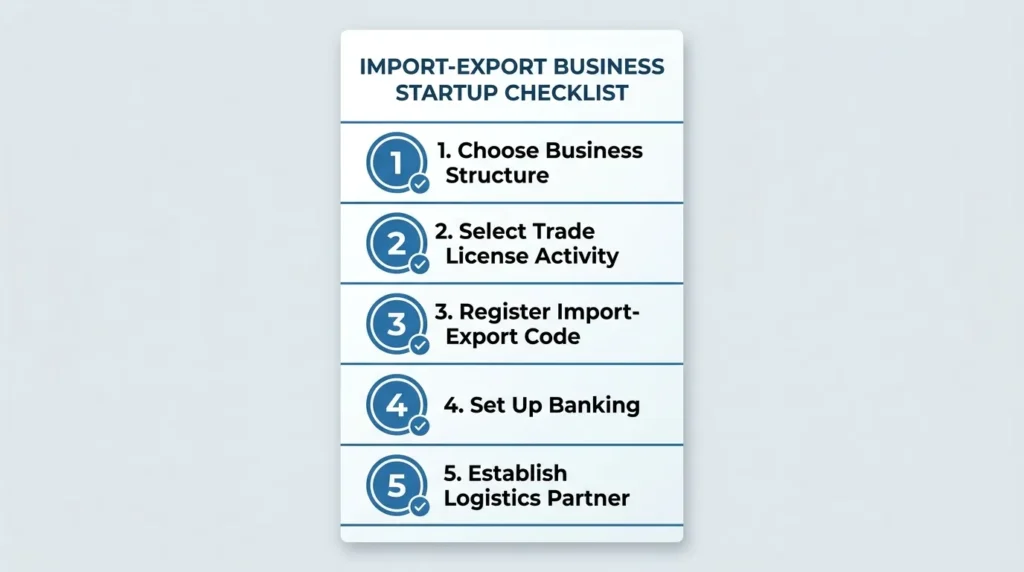
If you’re asking how to start an import export business in Dubai, the process generally follows five steps:
- Choose your business structure — Mainland, free zone, or offshore, depending on whether you plan to trade within the UAE market or purely internationally.
- Select your trade license activity — General trading or a category-specific import-export license, issued by the relevant Department of Economic Development (mainland) or free zone authority.
- Register for an import-export (customs) code — Required before you can file any customs declaration (covered in detail below).
- Set up banking and trade financing — Most international suppliers require a UAE business bank account before shipping goods.
- Establish your logistics and customs partner — Either build an in-house team or work with a freight forwarder and customs broker.
What counts as the best import and export business depends entirely on your market knowledge and existing network — sectors like auto parts, machinery, and FMCG consistently offer strong opportunities in Dubai due to steady regional demand, but success comes down to supplier relationships and compliance discipline more than the category itself.
Import Code Registration & Renewal in Dubai
You cannot legally import or export goods commercially in Dubai without a valid import code (also called an importer/exporter code or Customs Client Code) registered with Dubai Customs.
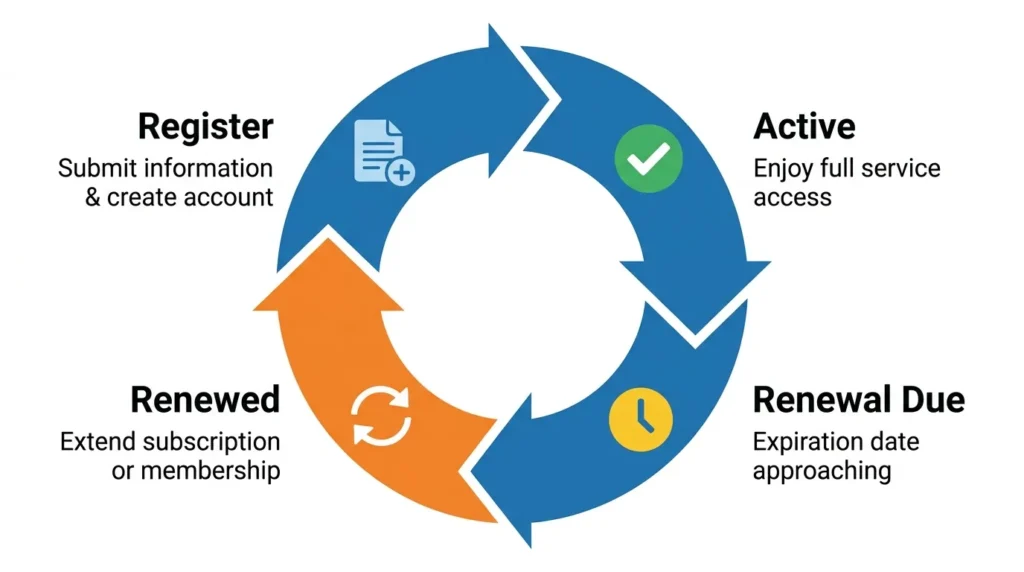
- Getting your import code — Registration happens through the Dubai Trade portal, linked to your valid trade license. This is typically a one-time setup per business entity.
- Import code renewal — Your Customs Client Code must be renewed periodically (aligned with your trade license renewal cycle). An expired import code will block your ability to file customs declarations until it’s renewed.
- Dubai Customs code renewal — Renewal is completed online through Dubai Trade and generally requires an updated, valid trade license as the prerequisite document.
- Importer code UAE-wide — If your business also imports through Abu Dhabi or Sharjah, note that each emirate’s customs authority may require its own registration, even under the same trade license.
Import Export Procedure in UAE — Step by Step
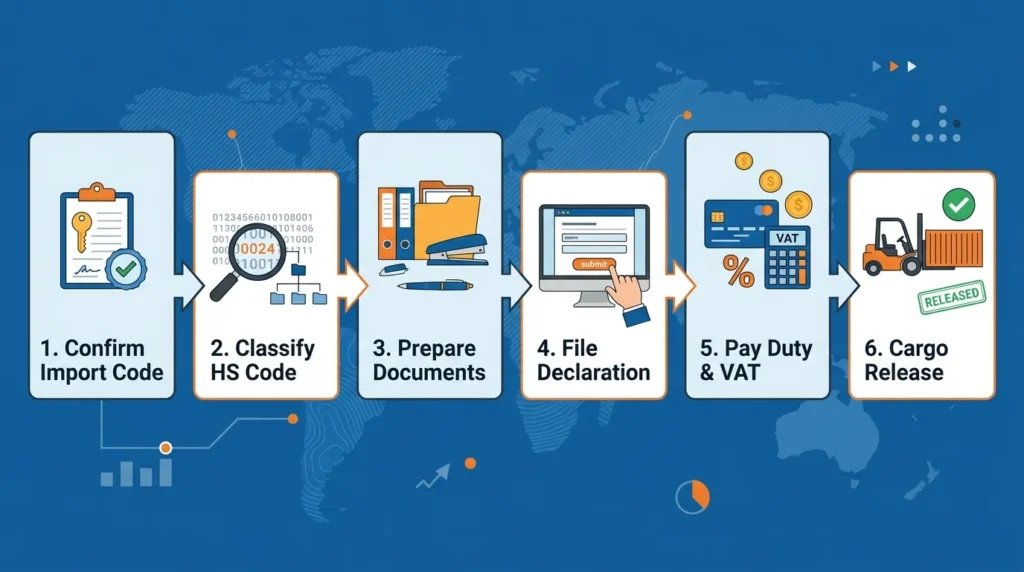
The import export procedure in UAE follows a consistent structure regardless of product category:
- Confirm your import code is active and your trade license is valid
- Classify your goods with the correct HS code (see our full HS Code Guide for how to do this accurately)
- Prepare the commercial invoice, packing list, and bill of lading or airway bill
- File the customs declaration through the Mirsal 2 system
- Pay applicable duty and VAT
- Clear inspection if your shipment is selected, then receive cargo release
Customs, Duty & Compliance for Import Export Businesses
Compliance is where most new import-export businesses in Dubai run into unexpected costs and delays, so it’s worth understanding the full picture before you ship:
- Dubai customs clearance and the dubai customs clearance procedure cover the actual process of getting your goods released — for a full cost and process breakdown, see our Customs Clearance Cost guide.
- Customs broker Dubai — A licensed broker files your declarations and manages classification on your behalf, particularly useful if you don’t have an in-house customs team.
- Clearing agents in Dubai — Often used interchangeably with customs brokers, clearing agents specifically manage the release of goods from ports and airports.
- Dubai import duty and Dubai import tax — The standard rate is 5% of the CIF (Cost, Insurance, Freight) value for most goods, with exceptions for categories like alcohol and tobacco, and exemptions for goods held within a free zone.
- HS code classification — Every shipment must be classified under the correct HS code, which directly determines your duty rate. See our detailed breakdown in the HS Code Guide covering the UAE’s 8-digit to 12-digit code transition.

The AEO Program — A Trusted Trader Advantage Most Businesses Overlook
The Authorized Economic Operator (AEO) program is a voluntary UAE Customs certification, based on World Customs Organization security standards, that most import-export businesses in Dubai simply don’t know exists — yet it can meaningfully reduce friction on every shipment.
Businesses certified under the UAE’s AEO program (part of a joint GCC AEO framework since 2023) typically benefit from:
- Reduced or minimal customs inspections
- Faster cargo release with lower risk scoring on imports
- Reduced documentation requirements, including electronic archiving instead of mandatory paper submission
- Recognition as a trusted trading partner across GCC member states through mutual recognition arrangements
The program is open to importers, exporters, customs brokers, freight forwarders, and other supply chain participants holding a valid UAE trade license and Customs Business Code. For high-volume traders, AEO certification is one of the most underused ways to cut recurring clearance delays.
How to Choose the Right Import Export Partner in Dubai
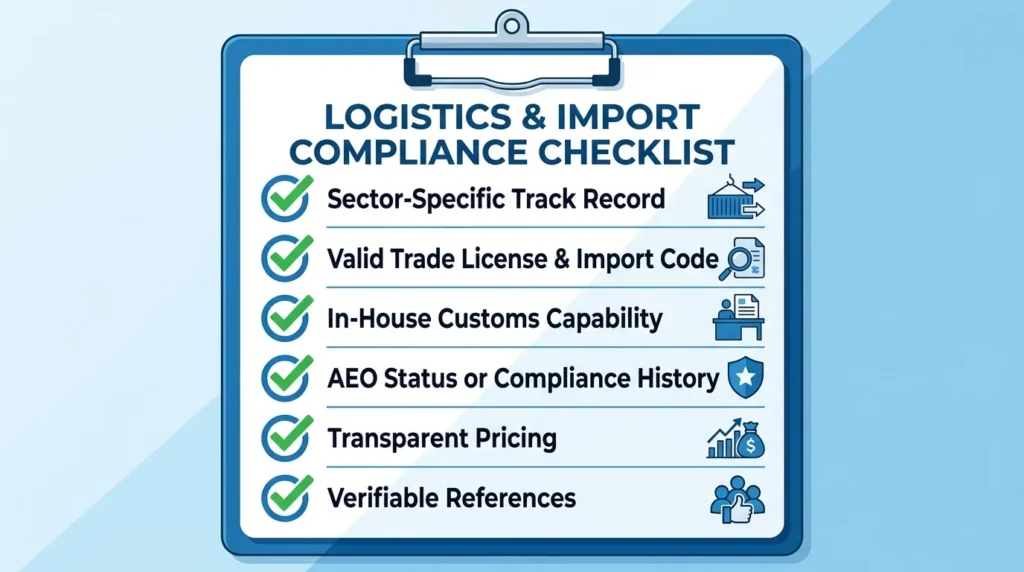
If you’re evaluating import export companies in Dubai or the wider UAE as a trading partner rather than building an in-house team, check for:
- Sector-specific track record — Experience in your exact product category, not just general trading volume
- Valid trade license and active import code — Confirm registration status directly rather than taking it on trust
- In-house customs and compliance capability — Reduces the risk of delays caused by handoffs between vendors
- AEO status or clear compliance history — A strong indicator of reliability and reduced customs friction
- Transparent, itemized pricing — Covering freight, customs, duty, and any handling or documentation fees
- References from businesses trading similar goods — More useful than generic testimonials
Frequently Asked Questions
What does an import export company in Dubai actually do? An import export company sources, ships, and manages the customs and logistics process for goods moving in or out of the UAE, often combining procurement, freight forwarding, and compliance under one service.
How do I start an import export business in Dubai? You’ll need to choose a business structure (mainland or free zone), obtain the right trade license, register an import-export code with Dubai Customs, set up UAE banking, and establish a logistics and customs partner.
What is an import code and do I need to renew it? An import code (Customs Client Code) is required to file any customs declaration in Dubai. It must be renewed periodically, generally aligned with your trade license renewal, and an expired code will block your ability to clear shipments.
What is the AEO program and is it worth applying for? The Authorized Economic Operator program is a voluntary UAE Customs certification that reduces inspections, speeds up cargo release, and cuts documentation requirements for compliant traders. It’s particularly valuable for businesses shipping frequently.
What’s the difference between a customs broker and a clearing agent in Dubai? The terms are often used interchangeably. A customs broker typically files declarations and manages classification, while a clearing agent focuses specifically on releasing goods from ports and airports — many companies in Dubai perform both roles.
How much is import duty in Dubai? The standard UAE import duty rate is 5% of the CIF value for most goods, with some categories taxed differently and goods held within a free zone exempt from duty until they move to the mainland.
Final Thoughts
Whether you’re searching for a reliable import export company in Dubai to handle your trade or planning to start your own, the businesses that succeed are the ones that treat compliance — import code registration, HS code accuracy, and customs procedure — as seriously as the trading relationship itself. Getting the paperwork right the first time, and knowing programs like AEO exist, is often what separates a smooth trading operation from one that’s constantly firefighting customs delays.
Looking for a trading or customs partner? Get in touch with DES Logistics for import-export support across the UAE.